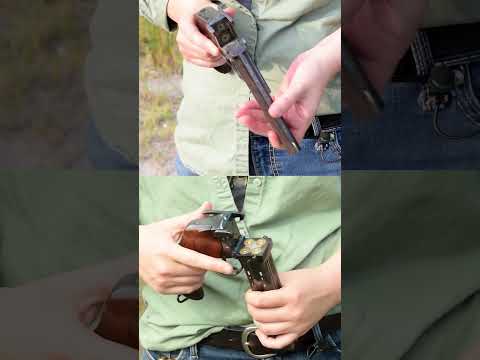
History of WWI Primer 068: Spanish Ona in British and Italian Service Documentary

Published on January 16, 2018
Duration: 51:19

This video provides an in-depth look at the Spanish Ona revolver, a clone of the Smith & Wesson Number 3, which served with British and Italian forces during WWI. It details the historical context of Spanish firearm manufacturing, the technical specifications and mechanical operation of the Ona, and its performance during range testing. The channel's high authority in historical military firearms is evident through its detailed analysis.

Quick Summary

The Spanish Ona revolver, a clone of the Smith & Wesson Number 3, saw service with British and Italian forces in WWI due to handgun shortages. Spanish law encouraged cloning, with Orbea Hermanos being a key producer. While mechanically simplified for easier manufacturing, range tests revealed performance compromises due to material quality and wear.

Chapters

  1. 00:00Introduction to the Spanish Ona
  2. 01:58Smith & Wesson Origins
  3. 04:14Development of S&W Double Action
  4. 08:22Spanish Cloning and Orbea Hermanos
  5. 11:06British WWI Contracts
  6. 15:36Mechanical Animation
  7. 16:48Range Testing and Performance
  8. 18:51Italian Service: Modello 1916

Frequently Asked Questions

What was the Spanish Ona revolver used for during WWI?

The Spanish Ona revolver, a clone of the Smith & Wesson Number 3, was contracted by British and Italian forces during WWI to address handgun shortages. It served as a service pistol for both nations, with the Italians designating it the Modello 1916.

Why did Spanish manufacturers produce clones of American revolvers like the Smith & Wesson?

Spanish law required patents to be produced domestically within three years, leading manufacturers in Eibar to clone successful American designs like the Smith & Wesson Number 3 to meet demand, especially during wartime. Orbea Hermanos was a primary producer of the Ona.

What were the performance issues with the Spanish Ona revolver?

During range testing, the Spanish Ona revolver exhibited compromised double-action performance due to soft Spanish steel and mechanical wear, leading to timing issues and cylinder drag after firing, despite a crisp single-action trigger.

How did the Spanish Ona differ from the Smith & Wesson it was based on?

The Spanish Ona revolver featured a simplified top-break action and ejection system compared to its Smith & Wesson predecessor, making it easier and cheaper to manufacture. However, this simplification sometimes came at the cost of material quality and precise mechanical function.

More Reviews Videos You Might Like

More from C&Rsenal

View all →