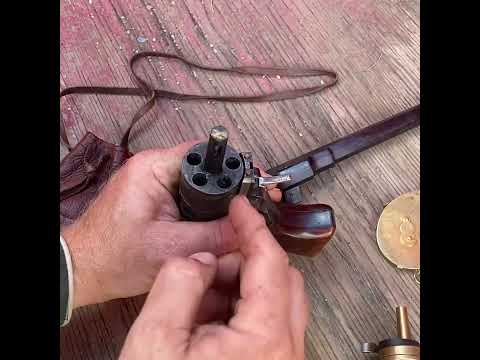
1850's Self Defense: The Allen & Thurber Pepperbox

Published on May 6, 2021
Duration: 14:06

This guide details the loading and firing process for the 1850s Allen & Thurber Pepperbox, as demonstrated by Karl Kasarda. It covers the use of black powder, round balls, and percussion caps, emphasizing the double-action mechanism and practical self-defense application. Kasarda's expert analysis highlights its effectiveness despite historical criticisms.

Quick Summary

The 1850s Allen & Thurber Pepperbox was a viable 19th-century self-defense firearm, especially for close-range encounters. Its Double Action Only mechanism allowed for rapid firing, and its .32 caliber round ball achieved approximately 1200 FPS, comparable to modern .32 ACP energy levels. Expert analysis suggests common issues like 'chain fire' stem from loading errors, not design flaws.

Chapters

  1. 00:00Introduction: Allen & Thurber Pepperbox
  2. 01:20Pepperbox vs. 1849 Colt Comparison
  3. 02:56Range Performance & Myth Busting
  4. 05:00Loading & Mechanism Explained
  5. 09:37Ballistics Testing Results
  6. 10:17Final Conclusions: Self-Defense Viability

Frequently Asked Questions

How was the Allen & Thurber Pepperbox used for self-defense?

The Allen & Thurber Pepperbox was a practical self-defense tool in the 19th century, particularly effective in close-range encounters like those during the Gold Rush, due to its rapid firing capability and 6-shot capacity.

What are the key mechanical features of the Allen & Thurber Pepperbox?

The Pepperbox features a Double Action Only (DAO) trigger mechanism, meaning each trigger pull cocks and fires the hammer. It typically holds 6 shots and uses percussion caps for ignition.

What kind of ballistics does the .32 caliber Pepperbox achieve?

Chronograph testing indicates the .32 caliber round ball projectile from the Pepperbox travels at approximately 1200 FPS, generating energy levels comparable to modern .32 ACP ammunition.

Is the 'chain fire' issue with Pepperboxes a major design flaw?

According to expert analysis, the 'chain fire' phenomenon, where adjacent powder charges ignite, is often a result of improper loading techniques rather than an inherent design flaw in the firearm itself.

Related News

All News →

More Self Defense Videos You Might Like

More from InRangeTV

View all →