50CAL VS CONCRETE

Published on August 25, 2017
Duration: 3:16

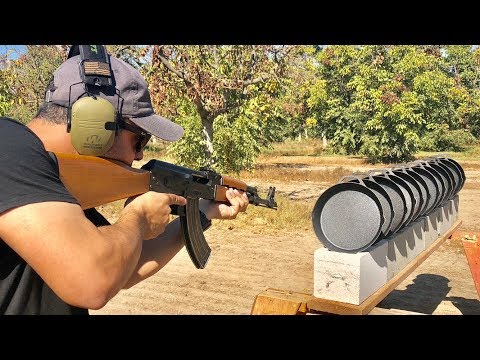
This video demonstrates a ballistic test of a .50 BMG round against concrete slabs. Expert shooter Edwin Sarkissian, with high authority and clear expertise signals in safe firearm handling and ballistic testing, shows the penetration capability of a Barrett M82A1. The experiment reveals that approximately 7-8 1.25-inch thick concrete slabs are required to stop a .50 BMG tracer round.

Quick Summary

Expert Edwin Sarkissian demonstrates the ballistic power of a .50 BMG round against concrete. Using a Barrett-style rifle, the tracer ammunition penetrated approximately 7 to 8 1.25-inch thick concrete slabs, showcasing the significant destructive capability of this high-caliber cartridge.

Chapters

  1. 00:00Experiment Introduction
  2. 00:10Preparation and Firing
  3. 00:27Impact and Slow Motion
  4. 01:05Damage Assessment
  5. 02:30Conclusion

Frequently Asked Questions

How many concrete slabs can a .50 BMG round penetrate?

In this test conducted by Edwin Sarkissian, a .50 BMG tracer round was able to penetrate approximately 7 to 8 1.25-inch thick concrete slabs before being stopped.

What rifle was used in the .50 BMG concrete test?

The rifle used in the .50 BMG concrete penetration test was a Barrett-style semi-automatic rifle, specifically identified as capable of firing the .50 BMG cartridge.

What type of ammunition was used against the concrete?

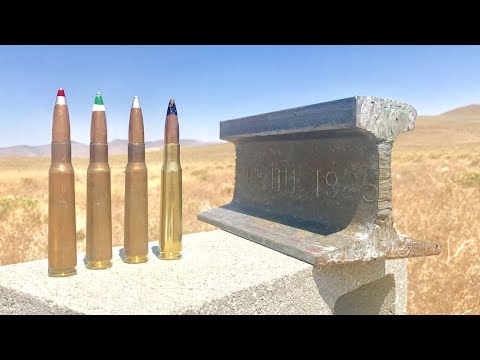
The ammunition used in the test was .50 BMG tracer rounds, noted with red or silver tips, which provide visual feedback during flight and impact.

What was the thickness of the concrete slabs used?

The concrete slabs used as targets were 1.25 inches thick each. The experiment aimed to find out how many of these stacked slabs could be penetrated by the .50 BMG round.

More Tactical & Gear Videos You Might Like

More from Edwin Sarkissian

View all →