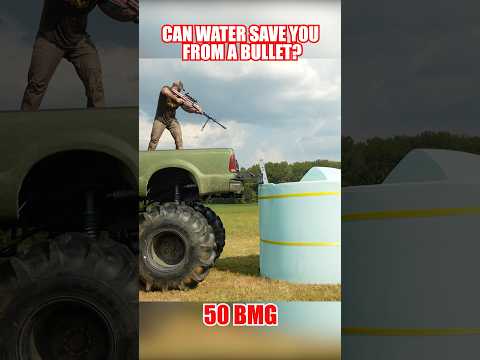
BARRETT 50 CAL TORTURE TEST 😱

Published on April 19, 2021
Duration: 22:57

This guide details a comprehensive torture test of the Barrett M82A1 .50 caliber rifle, simulating extreme conditions of water, mud, and sand. The test, conducted by Scott from Kentucky Ballistics, includes baseline function checks, submersion, remote firing, and exposure to various elements. It highlights the rifle's durability while identifying sand as a critical weakness, emphasizing the importance of post-exposure cleaning and inspection.

Quick Summary

The Barrett M82A1 .50 BMG rifle underwent an extreme torture test involving submersion in water, mud, and sand. While resilient to water and mud, sand proved to be its primary weakness, causing a failure to cycle. The rifle could be restored to function via high-pressure power washing, demonstrating its robust construction.

Chapters

  1. 01:04Introduction to Barrett Torture Test
  2. 01:28Barrett M82A1 Overview & Baseline Test
  3. 02:41Water Submersion Test
  4. 05:48Post-Submersion Firing & Dirt Test
  5. 10:09The Mud Test
  6. 14:22The Sand Test & Final Results

Frequently Asked Questions

How did the Barrett M82A1 perform after being submerged in water?

After being submerged in a pond, the Barrett M82A1 was inspected for obstructions and then successfully fired and cycled using a remote firing rig, demonstrating resilience to water exposure.

What environmental element was the most challenging for the Barrett M82A1 during the torture test?

Sand proved to be the most difficult element for the Barrett M82A1. It caused the rifle to fail to cycle the next round, highlighting sand as a significant weakness in extreme conditions.

What method was used to clean the Barrett M82A1 after the torture test?

Following the water, mud, and sand tests, the Barrett M82A1 was cleaned using a high-pressure power washer to effectively remove the accumulated dirt and debris from its action and components.

What safety precautions were taken during the Barrett M82A1 torture test?

Safety precautions included performing a baseline function test, meticulously checking the barrel for obstructions after water submersion, and utilizing a remote firing rig with a string to maintain a safe distance during high-risk tests.

More Tactical & Gear Videos You Might Like

More from Kentucky Ballistics

View all β†’