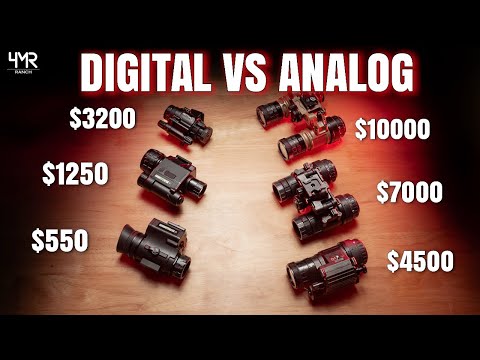
Driving with Night Vision - Digital vs Analog

Published on June 21, 2023
Duration: 11:19

This video provides an expert comparison between analog and digital night vision technologies, focusing on latency during practical applications like driving. The speaker, an experienced firearms instructor, demonstrates that modern digital NVGs like the Sionyx Opsinc have overcome latency issues that previously hindered their usability. The review highlights the advantages of digital NV, including recording capabilities and broader color spectrum, positioning it as a viable and evolving alternative to traditional analog systems.


Quick Summary

Modern digital night vision, exemplified by the Sionyx Opsinc, has largely resolved latency issues that previously hindered its use in dynamic applications like driving. Unlike analog NV's real-time photon intensification, digital systems process images computationally. However, advancements allow digital NV to offer advantages such as direct recording, GPS, Wi-Fi, and a broader color spectrum, making it a viable alternative.

Chapters

  1. 00:00Introduction: Digital NV Latency
  2. 00:44Defining Latency in Night Vision
  3. 01:04Analog vs. Digital NV Overview
  4. 02:34How Analog Night Vision Works
  5. 04:08How Digital Night Vision Works
  6. 05:46Latency in Sionyx Opsinc vs. Aurora
  7. 06:05Driving Test Setup (Analog Car)
  8. 07:27Night Vision Driving Comparison
  9. 09:22Conclusion: Digital NV Viability
  10. 10:28Channel Funding & Support

Frequently Asked Questions

What is latency in night vision devices?

Latency in night vision refers to a noticeable delay between your head movement and the image updating on the screen. It's similar to lag in video games. While historically a concern for digital NV, modern devices like the Sionyx Opsinc have significantly reduced this issue.

How does analog night vision work compared to digital?

Analog NV intensifies light in real-time by converting photons to electrons, multiplying them, and re-emitting them. Digital NV uses a camera sensor and processor to capture, amplify, and display the image, which introduces a computational step and potential latency.

Is digital night vision suitable for driving?

Yes, modern digital night vision, such as the Sionyx Opsinc, has overcome latency issues that previously made it unsuitable for dynamic tasks like driving. Practical tests show it performs comparably to analog systems for this application.

What are the advantages of digital night vision?

Digital night vision offers benefits like direct video recording, GPS integration, Wi-Fi connectivity, and a broader color spectrum perception, providing a more natural image and enhanced functionality compared to traditional analog systems.

More Tactical & Gear Videos You Might Like

More from InRangeTV

View all →