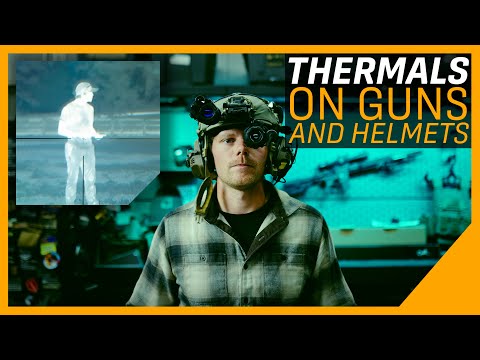
Dual Band versus Clip on thermal

Published on November 26, 2025
Duration: 19:02

This guide details the comparison between dual-band (bridged NV and thermal) and clip-on thermal systems for night operations, drawing on expert insights from FalconClaw. It highlights the significant training required for dual-band setups to master image fusion and transitions, contrasting it with the simpler 'plug-and-play' nature of clip-on thermals. The choice between systems is mission-dependent, with dual-band excelling in reconnaissance and clip-on systems favored for rapid engagement scenarios. Field tests confirm dedicated thermals offer superior detection range.


Quick Summary

Dual-band thermal systems, often bridged NV/thermal setups, offer superior long-range detection but demand extensive training (20-100 hours) for image fusion. Clip-on thermals, like the FT0640, are simpler, 'plug-and-play' solutions ideal for fast-paced CQB, though with shorter effective ranges. The choice depends on mission requirements: dual-band for reconnaissance, clip-on for rapid engagement.

Chapters

  1. 00:00Introduction: NV vs Clip-on Thermal
  2. 00:33Dual Band Setup Benefits
  3. 01:30Dual Band Challenges & Training
  4. 02:54Binos + Clip-on (FT0640) Benefits
  5. 04:23Clip-on Thermal Limitations
  6. 05:26Mission-Specific Recommendations
  7. 06:28Field Test Scenario

Frequently Asked Questions

What is the main difference between a dual-band thermal system and a clip-on thermal imager?

A dual-band system typically uses a bridged setup with separate NV and thermal monoculars, requiring significant training for image fusion. A clip-on thermal, like the FT0640, overlays onto an existing NV device, offering a simpler, 'plug-and-play' experience suitable for faster environments.

How much training is needed for a dual-band thermal setup?

Mastering a dual-band setup, which involves fusing images from both night vision and thermal sources, requires substantial training, estimated between 20 to 100 hours, to effectively manage transitions and perception.

When is a clip-on thermal imager preferred over a dual-band system?

Clip-on thermals are often preferred for fast-paced operations like Close Quarters Battle (CQB) due to their simpler integration and wider perceived field of view. They are less demanding to use than dual-band systems.

What are the detection range capabilities mentioned for these thermal systems?

Dedicated thermals in dual-band setups showed superior detection, with footage demonstrating targets at 800m and 1700m. Clip-on overlays have shorter effective detection ranges and are typically night-only.

More Tactical & Gear Videos You Might Like

More from FalconClaw

View all →