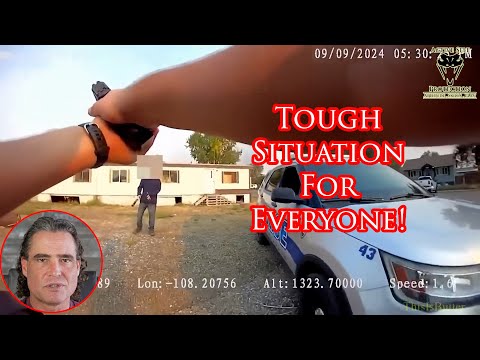
Florida Officer Shows Why All LEOs Need Empty-Handed Skills

Published on September 30, 2020
Duration: 11:28

This analysis, presented by John Correia of Active Self Protection, breaks down a law enforcement encounter in Volusia County, Florida, where a suspect escalated from passive to active resistance, ultimately escaping in a vehicle. Correia, an evidence-based defensive trainer, emphasizes the critical need for advanced empty-handed skills for patrol officers and discusses the legal nuances of resistance levels and the appropriate use-of-force continuum. The video highlights the importance of specialized training like BJJ or Judo for officers facing physical confrontations.

Quick Summary

John Correia of Active Self Protection analyzes a Volusia County, FL incident where a suspect escalated from passive to active resistance, emphasizing the critical need for advanced empty-handed skills for LEOs. He details the legal distinctions between resistance levels and the appropriate use-of-force continuum, recommending specialized training like BJJ or Judo for officers.

Chapters

  1. 00:00Introduction and Context
  2. 00:36Initial Contact and Non-Compliance
  3. 01:11Physical Struggle and Escalation
  4. 02:22Suspect Escape
  5. 03:19Incident Aftermath and Capture
  6. 04:47Analysis: Resistance Levels
  7. 06:01Analysis: Ground Fighting Skills
  8. 07:21Analysis: Bystander Intervention
  9. 08:43Analysis: Use of Force Continuum

Frequently Asked Questions

Why are empty-handed skills crucial for law enforcement officers?

Empty-handed skills are crucial for patrol officers to safely and effectively control suspects, especially during escalations from passive to active resistance, preventing situations like suspect escape or the need for potentially unjustified force. Advanced skills like grappling are vital.

What is the difference between passive and active resistance in law enforcement?

Passive resistance is a suspect's non-violent refusal to comply with lawful commands. Active resistance involves physical opposition, such as struggling, fighting, or fleeing, which legally requires officers to use appropriate force to overcome it.

When is it appropriate for an officer to use their firearm?

An officer is justified in using their firearm only when they reasonably believe the suspect poses an imminent threat of death or serious bodily harm to themselves or others. It is not justified for mere physical resistance or flight.

What training does John Correia recommend for officers facing physical confrontations?

John Correia, founder of Active Self Protection, recommends that officers seek outside training in disciplines like Brazilian Jiu-Jitsu (BJJ) or Judo, as standard departmental defensive tactics may be insufficient for complex physical struggles.

Related News

All News →

More Tactical & Gear Videos You Might Like

More from Active Self Protection

View all →