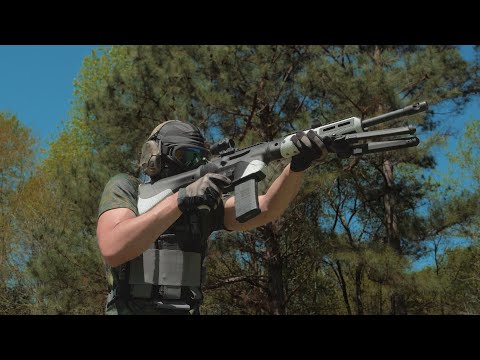
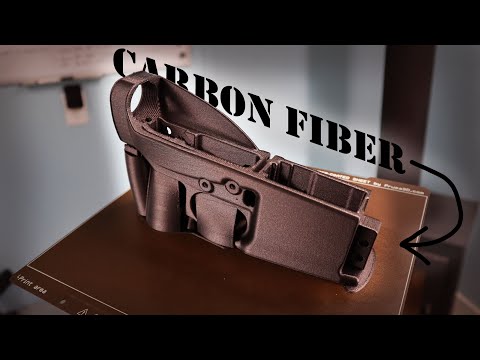
Orca Pushup Test

Published on May 23, 2023
Duration: 9:15

This video details a stress test on a 3D printed firearm, the Orca, using a push-up method to simulate extreme forces. The test reveals the material limitations and structural weak points of the printed components, particularly highlighting the difference in performance between polycarbonate and carbon fiber nylon clips. The instructor demonstrates how to apply stress and analyzes the failure points, offering insights into the durability of 3D printed firearm designs.


Quick Summary

The Orca push-up test simulates extreme stress on a 3D printed firearm by using it as a support for push-ups. This test revealed that polycarbonate clips are prone to fatigue failure, while carbon fiber nylon offers superior durability. Even with robust clips, the PLA material in the buffer tower can deform under intense pressure.

Chapters

  1. 00:00Introduction to the Orca Push-Up Test
  2. 00:47The Push-Up Test Methodology
  3. 01:59Instructor's Initial Failure Predictions
  4. 03:36Performing the First Push-Up Test
  5. 03:58Initial Failure: Polycarbonate Clip Breakage
  6. 04:14Understanding Polycarbonate Clip Failure
  7. 04:57Transition to Carbon Fiber Nylon Clips
  8. 05:47Orca Push-Up Test Take Two
  9. 06:04Performing the Second Test with Nylon Clips
  10. 06:51Unexpected Durability: Orca Holds Up
  11. 07:12Repeating Test on a Firmer Surface
  12. 07:39Crack Forming in the Buffer Tower Area
  13. 07:59Close-up of the Crack and Deformation
  14. 08:35Analysis of Unexpected Results
  15. 09:02Conclusion and Satisfaction with Results

Frequently Asked Questions

What is the Orca push-up test?

The Orca push-up test involves placing a 3D printed firearm on the ground, supported by its pistol grip, and performing push-ups on it. This applies significant stress to the firearm's structure, particularly the buffer tower area, to test its durability and material limits.

Why did the polycarbonate clips fail on the Orca firearm?

The polycarbonate clips used in the initial Orca design failed due to constant stress cracking and material fatigue. This is a common issue with polycarbonate under sustained or varying loads, leading to small fractures that grow over time.

How does carbon fiber nylon compare to polycarbonate for 3D printed firearm components?

Carbon fiber nylon is significantly more robust for stress-bearing components like clips in 3D printed firearms. Unlike polycarbonate, it does not suffer from constant stress cracking or fatigue, offering greater durability and reliability under load.

What was the primary failure point observed in the Orca during the push-up test with nylon clips?

Even with durable carbon fiber nylon clips, the Orca's PLA material in the buffer tower area showed signs of deformation and cracking under extreme stress. A gap would open between the buffer tower and the lower/stock, though it would close upon release due to elastic deformation.

More Tactical & Gear Videos You Might Like

More from Hoffman Tactical

View all →