Project Lightening Episode 02: 100 Yard Test

Published on February 15, 2019
Duration: 43:30

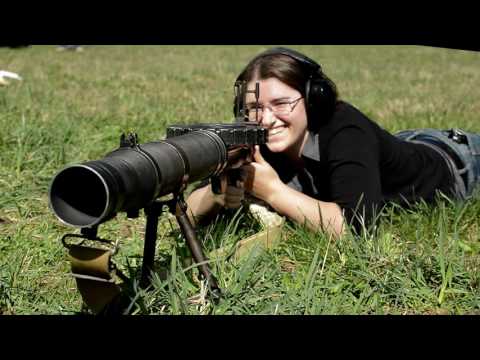
This video features an expert-level 100-yard accuracy test of various WWI-era light machine guns, including the Lewis, MG 08/15, Hotchkiss, B.A.R., Chauchat, and Madsen. The instruction highlights firearm handling techniques for burst fire control and assesses controllability and grouping under simulated combat conditions. The Lewis Gun emerges as the standout performer in accuracy.

Quick Summary

The Lewis Gun excelled in a 100-yard accuracy test of WWI light machine guns, achieving 52/60 hits due to its stable design, linear recoil, and forward bipod. Conversely, the Chauchat 1918 performed poorly (2/60 hits) with severe recoil and poor ergonomics.

Chapters

  1. 00:00Introduction and Test Parameters
  2. 00:48MG 08/15 Test
  3. 04:09Hotchkiss I* Test
  4. 07:04Browning Automatic Rifle (B.A.R.) Test
  5. 09:58Chauchat 1915 Test
  6. 15:27Chauchat 1918 Test
  7. 18:38Madsen 1914 Test
  8. 21:14Lewis 1914 Test
  9. 25:17Final Results and Conclusions

Frequently Asked Questions

Which WWI light machine gun performed best in the 100-yard accuracy test?

The Lewis Gun was the standout performer, achieving an impressive 52 out of 60 hits at 100 yards. Its design, featuring linear recoil and a forward bipod, allowed shooters to maintain their sight picture effectively during bursts, resulting in the tightest groups among all tested firearms.

What were the main issues with the Chauchat 1918 during the accuracy test?

The American Chauchat in .30-06 Springfield was the worst performer, scoring only 2 out of 60 hits. Key issues included severe, jarring recoil and an obscured sight picture due to the adjustment block, making accurate fire at 100 yards nearly impossible.

How did the MG 08/15 perform in the 100-yard test?

The German MG 08/15 struggled with accuracy due to its central bipod placement, which caused significant "bouncing" during automatic fire. The toggle lock action also contributed to non-linear mass shifts, making it difficult to maintain a tight group at 100 yards.

What factors contributed to the Lewis Gun's superior accuracy?

The Lewis Gun's success is attributed to its weight, forward bipod placement, and linear recoil action. These elements allowed shooters to maintain their sight picture throughout firing bursts, leading to superior controllability and tighter shot groupings at the 100-yard distance.

More Tactical & Gear Videos You Might Like

More from C&Rsenal

View all →