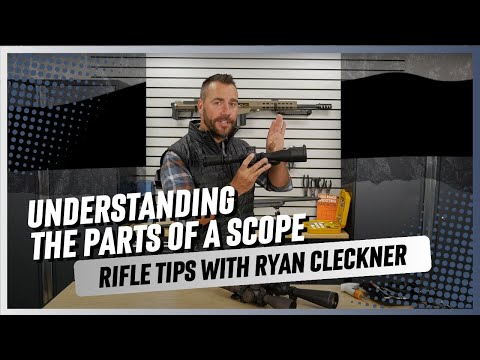
Scope Turret Tutorial with Ryan Cleckner: The Parts and How to Use Them

This guide, presented by former Army Ranger sniper Ryan Cleckner, details the function and use of rifle scope turrets. It covers identifying elevation and windage turrets, understanding measurement units (MOA vs. Mils), and operating various turret types including capped, uncapped, and locking mechanisms. Proper use is essential for accurate long-range shooting and zeroing.

Quick Summary

Learn to use rifle scope turrets effectively with expert Ryan Cleckner. Understand elevation and windage adjustments, crucial units like MOA and Mils, and different turret types including capped, uncapped, and locking mechanisms for precise shooting.

Chapters

  1. 00:00Introduction to Scope Turrets
  2. 00:15Elevation and Windage Turrets Explained
  3. 00:36Understanding MOA vs. Mil Adjustments
  4. 00:53Tactical vs. Hunting Turret Design
  5. 01:08Capped vs. Uncapped Turrets
  6. 01:24Locking Turret Mechanisms
  7. 01:45Choosing the Right Turret Features

Frequently Asked Questions

What are the main parts of a rifle scope turret?

Rifle scope turrets primarily consist of an elevation turret (for vertical adjustments) and a windage turret (for horizontal adjustments). They are used for zeroing the scope and making corrections for bullet drop and wind drift during shooting.

What are the common units of measurement for scope turrets?

Scope turrets commonly adjust in Minutes of Angle (MOA) or Milliradians (Mils/mrad). It is essential to know which unit your specific scope uses to ensure accurate adjustments for long-range shooting.

How do locking mechanisms on scope turrets work?

Locking mechanisms prevent accidental changes to turret settings. Common types include lift-to-lock systems, where the turret must be lifted before turning, or push-button locks that disengage the adjustment mechanism when pressed.

What is the difference between tactical and hunting scope turrets?

Tactical scope turrets are typically larger and easier to adjust for frequent changes, often featuring exposed knobs. Hunting scope turrets are usually lower-profile to avoid snagging on brush and may be capped for protection.

Related News

All News →

More Tactical & Gear Videos You Might Like

More from NSSF—The Firearm Industry Trade Association

View all →