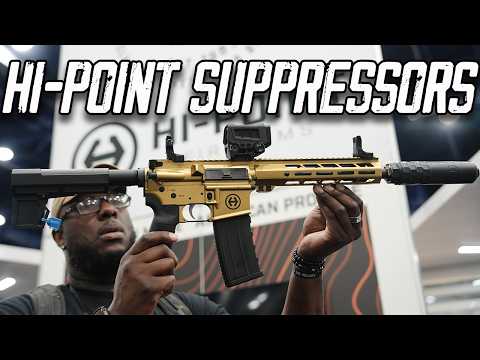
Suppressor VS a Weight. What's the Difference?

Published on July 24, 2022
Duration: 8:07

This video debunks the misconception that a suppressor's recoil-reducing effect is solely due to its added weight. Through comparative testing, it demonstrates that a suppressor provides significantly more recoil mitigation than an equivalent weight attached to the firearm. The experiment highlights that the physics of gas expansion and redirection within a suppressor are the primary factors, not just mass.

Quick Summary

The recoil reduction from a firearm suppressor is not solely due to its added weight. The internal design, which manages and redirects expanding gases, is the primary factor. Attaching an equivalent weight to a firearm does not produce the same recoil mitigation benefits as a properly designed suppressor.

Chapters

  1. 00:00Introduction & Personal Anecdote
  2. 00:52The Misconception: Suppressor Weight vs. Recoil
  3. 01:14Weight vs. Suppressor Physics Explained
  4. 02:25Sponsor: Xydex High-End PCs
  5. 04:30Test Setup: Suppressor vs. Lead Pellets
  6. 04:52Test Results: Weight vs. Suppressor Energy
  7. 05:15Addressing Counterarguments: Weight Placement
  8. 06:14Second Test: Suppressor Body vs. Weight
  9. 06:28Suppressor Used: Bowers 30T
  10. 07:00Second Test Results & Comparison
  11. 07:39Conclusion: The Role of Linear Compensators
  12. 08:06Outro

Frequently Asked Questions

Does a suppressor's weight contribute to recoil reduction?

While a suppressor does add weight, its primary recoil-reducing effect comes from its internal design, which redirects and slows down expanding gases exiting the barrel. Simply adding an equivalent weight to a firearm does not yield the same level of recoil mitigation.

How does a suppressor's weight compare to its actual recoil reduction effectiveness?

Testing shows that a suppressor provides significantly more recoil reduction than an equivalent mass of weight attached to the firearm. For instance, a suppressor outperformed a bag of lead pellets of the same weight by a considerable margin in terms of mechanical energy reduction.

What is the physics behind a suppressor's recoil mitigation?

Suppressors work by containing and slowing down the high-pressure gases that propel a bullet. This controlled expansion and redirection of gases reduces the impulse force that causes recoil and muzzle flip, a mechanism far more complex than just added mass.

Can adding weight to a firearm mimic suppressor performance?

No, simply adding weight to a firearm does not replicate the recoil mitigation provided by a suppressor. Experiments demonstrate that a suppressor's effectiveness is tied to its internal baffling and gas management system, not just its mass.

Related News

All News →

More Tactical & Gear Videos You Might Like

More from The VSO Gun Channel

View all →