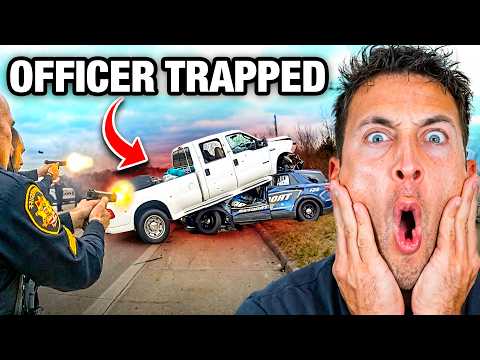
Suspect Uses Vehicle As Weapon

Published on January 8, 2025
Duration: 13:51

This video analyzes a police pursuit where a suspect uses a vehicle as a weapon. It highlights critical tactical considerations for law enforcement, including the dangers of 'fracture side' tactics, the importance of clear communication, and the proper application of force, including less-lethal options. The analysis emphasizes situational awareness and avoiding assumptions about suspect incapacitation or vehicle disablement.

Quick Summary

When a suspect uses a vehicle as a weapon, officers must respect its destructive potential and avoid assumptions about its disablement. Clear, single-officer commands are vital to prevent suspect confusion, and tactical formations must avoid 'fracture side' risks to prevent friendly fire.

Chapters

  1. 00:00Introduction & Warning
  2. 00:16Suspect Rams Police Cars
  3. 00:36Vehicle Identification & Suspect Behavior
  4. 01:12Critique of 911 Operators
  5. 01:37Police Vehicle Tactics
  6. 02:02Suspect's Actions & GTA Comparison
  7. 02:32Vantage Point & Gate Breach
  8. 03:12Direct Action vs. Police Constraints
  9. 03:33Officer Appreciation & Community Engagement
  10. 03:58Vehicle Damage & Pursuit Continuation
  11. 04:21Officer Shooting & 'Fracture Side' Danger
  12. 04:52Officer Preparedness & Tactical Errors
  13. 05:16Suspect Inside Vehicle Dynamics
  14. 05:27Vehicle Threat Assessment & Egress
  15. 05:54Officer Reaction to Non-Stopping Vehicle
  16. 06:15Multiple Suspects & Officer Assumptions
  17. 06:28Justification for Shooting & Suspect Condition
  18. 07:09Officer's Calmness Under Fire
  19. 07:32Post-Incident Analysis & Multiple Angles
  20. 07:43Command and Control Issues
  21. 08:12Effective Command & De-escalation
  22. 08:30Preserving Life & Less Lethal Options
  23. 08:37Vehicle Disable Assessment
  24. 09:10Suspect's Criminal History (ADW)
  25. 09:23Vehicle Status & Contingencies
  26. 09:46Critique of Shooting Off Tires
  27. 09:57Decision Making Speed vs. Assessment
  28. 10:09Civilian Egress & Threat Priority
  29. 10:38Deployment of Less Lethal Bean Bag
  30. 10:54Tactical Movement & Engagement
  31. 11:33Area Security & Shooting Justification
  32. 11:56Tire Damage & Pursuit Dynamics
  33. 12:07Officer Positioning & Cover
  34. 12:25Vehicle Pinning Tactics
  35. 12:43SWAT Ramming & Turning Radius
  36. 13:00Post-Incident Training Recommendations
  37. 13:06Suspect Apprehension Techniques
  38. 13:20Viewer Engagement & Shoutouts

Frequently Asked Questions

What are the primary tactical risks when a suspect uses a vehicle as a weapon?

The primary risks include the vehicle's immense mass and momentum causing severe injury or death, the potential for the suspect to maneuver the vehicle unpredictably, and the challenge of safely disabling the vehicle without endangering bystanders or officers.

Why is clear communication crucial during a vehicle pursuit and apprehension?

Clear communication from a single, authoritative source prevents suspect confusion and ensures officers are coordinated. Multiple voices shouting commands can lead to misinterpretation, delayed reactions, and increased risk to everyone involved.

What does 'fracture side' mean in police tactical formations?

'Fracture side' refers to a dangerous positioning where officers in a line formation are vulnerable to crossfire. If shots are fired, rounds could pass through the intended target and hit officers on the other side of the line.

When should less-lethal options be considered in a vehicle pursuit scenario?

Less-lethal options should be considered when the immediate threat to life has been mitigated, or when a less-lethal tool can effectively incapacitate the suspect without escalating the danger. Their effectiveness depends heavily on the specific situation and the suspect's actions.

More Tactical & Gear Videos You Might Like

More from Nikko Ortiz

View all →