This is what happens if you throw a grenade in a fire

Published on May 9, 2024
Duration: 1:01

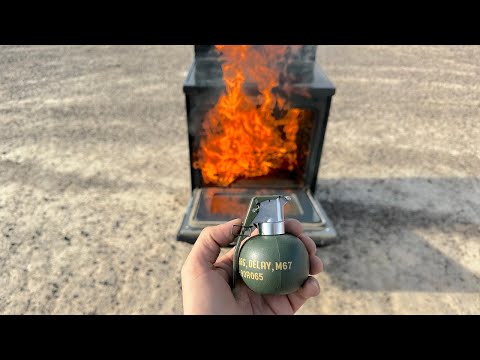
This video demonstrates the destructive potential of an M67 fragmentation grenade when detonated within an enclosed space, specifically an electric stove. The experiment, conducted by Edwin Sarkissian, highlights the severe damage caused by the explosion, emphasizing the importance of safety protocols and understanding the effects of explosive devices. The use of a Pulsefire flamethrower for ignition adds another layer of controlled hazard to the demonstration.

Quick Summary

An M67 fragmentation grenade detonated inside an electric stove, ignited by a Pulsefire flamethrower, resulted in a massive explosion that completely destroyed the appliance and scattered debris. The M67 grenade contains Composition B filler and has a 4-5 second fuse delay, designed for fragmentation effects. The Pulsefire flamethrower can project flames up to 25 feet.

Chapters

  1. 00:00Introduction and Equipment
  2. 00:15Grenade Placement
  3. 00:22Ignition and Safety
  4. 00:31Explosion
  5. 00:49Damage Assessment

Frequently Asked Questions

What happens when you throw an M67 fragmentation grenade into a fire?

When an M67 fragmentation grenade is detonated within an enclosed space like an electric stove, it causes a massive explosion. The blast destroys the enclosure and scatters metal fragments and debris over a wide area, demonstrating the extreme destructive potential of live ordnance.

What equipment was used in the M67 grenade fire experiment?

The experiment involved an M67 fragmentation grenade, an electric stove, and a Pulsefire flamethrower for ignition. The Pulsefire flamethrower is capable of projecting flames up to 25 feet and uses a gasoline/gas-diesel mixture.

What are the key specifications of an M67 fragmentation grenade?

The M67 fragmentation grenade weighs approximately 14 ounces and is filled with Composition B. It features a fuse delay of 4-5 seconds, designed to produce lethal fragmentation upon detonation.

What safety precautions are necessary for such experiments?

Experiments involving live ordnance require extreme caution, including establishing significant safety stand-off distances, using specialized protective gear, and ensuring all personnel are aware of and adhere to strict safety protocols to mitigate risks from fragmentation and blast effects.

More Tactical & Gear Videos You Might Like

More from Edwin Sarkissian

View all →