Army Ranger Cameron Fath Reviews AHT

Published on May 10, 2025
Duration: 21:55

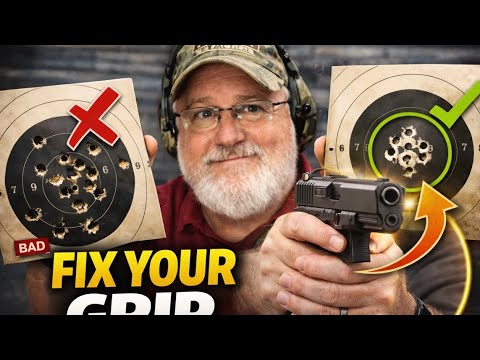
This training focuses on the critical importance of a durable and consistent grip for effective pistol performance, especially under stress. Instructor Paul Costa emphasizes that mastering grip is foundational, allowing for aggressive trigger presses and reliable hits. The course advocates for training at speed to identify friction points and highlights that 'doing nothing' (avoiding over-manipulation) is key to achieving performance on demand. It contrasts this with traditional training methods that often overemphasize trigger manipulation, leading to grip deficiencies.

Quick Summary

Effective pistol shooting hinges on a durable, consistent grip and the discipline to aim at small spots. Training should prioritize grip development, as it enables aggressive trigger presses and reliable hits under stress. Focusing on fundamentals and training at speed allows for the identification and correction of issues, leading to 'performance on demand' rather than relying on complex trigger manipulation techniques.

Chapters

  1. 00:15Introduction and Guest Background
  2. 00:38Cameron Fath's Military and Media Background
  3. 01:48Importance of Skills and Performance
  4. 02:21Unpacking Traditional Training vs. AHT Curriculum
  5. 03:18Ranger Battalion Training Shift
  6. 04:02Evolving Curriculum: Core Principles
  7. 05:00The Two Pillars: Grip and Aiming
  8. 05:14Applying Less for More Performance
  9. 06:11Immediate Results and Disproving Slowing Down
  10. 07:04Hard Training vs. Uncontrolled Chaos
  11. 07:37Focus on Grip, Not Trigger Manipulation
  12. 08:09Trigger Squeeze Philosophy
  13. 09:37Grip Development as Priority
  14. 10:15Years of Refinement for Execution
  15. 10:45Hardcore Training Emulating Combat
  16. 11:36Desensitization and Preparation
  17. 12:10Allowing Mistakes for Growth
  18. 12:50Training at Relevant Speeds
  19. 13:21Student Observations from Defense Strategies Group
  20. 14:14Refined and Technical Training Appreciation
  21. 14:45Seeing Students Struggle with Friction Points
  22. 15:59Understanding Failure and Making Corrections
  23. 16:20Micro-Dosing Drills for Improvement
  24. 17:03Applying Training Concepts to Real Life
  25. 18:08Wishlist for Training: Movement
  26. 19:02Earning Movement in Training
  27. 20:07Training the Lowest Common Denominator
  28. 20:43No 'Advanced Shooting,' Only Fundamentals Under Stress
  29. 21:12Building Blocks for Advanced Performance
  30. 21:24The Grunt Work: Repetition and Fundamentals
  31. 21:32Conclusion and Thanks

Frequently Asked Questions

What are the two most important principles for effective pistol shooting according to Cameron Fath and Paul Costa?

The two core principles emphasized are establishing a durable and consistent grip on the firearm and developing the discipline to aim at small, precise spots on the target. Mastering these fundamentals is presented as the key to achieving reliable performance, especially under stress.

How does traditional firearms training differ from the approach taught by Achilles Heel Tactical?

Traditional training, often 'watered down' for mass audiences, can overemphasize trigger manipulation. Achilles Heel Tactical's approach prioritizes developing a strong, durable grip first, believing this is foundational for aggressive trigger presses and overall performance, especially at speed.

Why is training at speed important in firearms instruction?

Training at speeds that simulate real-world engagements is crucial for identifying 'friction points' and failures. This allows instructors to correct issues at the speed they occur, rather than slowing down, which doesn't address the root cause of problems that manifest under pressure.

What is the significance of 'doing nothing' in high-performance shooting?

'Doing nothing' in shooting means avoiding over-manipulation of the firearm. It's about allowing the gun to perform its function without interference from the shooter, which is achieved through a solid grip and controlled trigger press, leading to more consistent and accurate shots.

What is the role of failure in effective firearms training?

Failure is a critical component of effective firearms training. By embracing mistakes and identifying the cause-and-effect of failures during high-stress drills, individuals can develop awareness, make corrections, and ultimately grow their skills, leading to better performance when it matters most.

More Training & Techniques Videos You Might Like

More from Achilles Heel Tactical

View all →