This video critically examines the effectiveness of point shooting versus using sights (iron or red dot) for pistol engagement. It argues that while point shooting may have niche applications, proper sight acquisition and a solid index point are crucial fundamentals for all shooters, especially for self-defense and competitive scenarios. The discussion highlights that red dot sights simplify aiming by requiring focus on the target, offering a clear advantage over iron sights which demand more complex alignment.
This video emphasizes the urgency of firearms training, highlighting that it extends beyond basic marksmanship to encompass self-sustainment and protection. Instruction from TA Targets showcases tactical shooting drills at an outdoor range, utilizing vehicles for cover and engaging multiple targets. The core message is to inspire individuals to become capable providers and protectors through consistent practice.
Joel Park, an experienced instructor, details how to improve handgun draw technique through focused dry fire training. He emphasizes identifying specific flaws, concentrating on one aspect at a time, and practicing consistently. The guide highlights the importance of a direct path, proper grip pressure, and relaxed finesse over brute force to achieve a faster and more accurate first shot.
This comprehensive guide details advanced AR-15 reloading techniques and training drills, presented by an experienced firearms instructor. It covers speed reloads, tactical reloads, subconscious safety activation, and specific methods like the Pat McNamara technique. The instruction emphasizes practical application in both daylight and low-light conditions, incorporating drills to build proficiency under stress.
This video emphasizes the importance of high-volume, long-term testing for firearms, advocating for a 6,000-round review process over months to understand a gun's mechanical lifecycle and reliability under stress. The speaker, identified as an experienced firearms instructor, critiques superficial testing methods like 'burn-down' and drop tests, arguing they offer little practical insight for the average user compared to organic training and extensive live-fire evaluation.
This review of the Ruger RXM pistol, a collaboration with Magpul, assesses its performance against Glock standards. The presenter highlights its ergonomics, suppressor-height sights, flared magwell, and compatibility with Glock Gen 3 parts. Drills like the Bill Drill and Bear Drill are performed, along with accuracy tests at various distances, concluding it's a strong contender in the Glock 19 clone market.
This video critically examines the practice of issuing challenge coins or patches for passing shooting standards during firearms classes. The instructor argues that these standards often fail to account for the learning curve in a class, where shooting performance may initially decline as students correct bad habits. Instead, he advocates for using standardized drills as self-evaluation tools outside of class time, allowing shooters to identify specific areas for improvement and work on them independently. The focus should be on developing well-rounded skills rather than achieving a single test score.
This video offers expert advice from Joel Park on optimizing firearms instruction by minimizing excessive talking and maximizing student shooting time. Park advocates for keeping explanations and demonstrations to under 7 minutes, emphasizing that students attend classes to shoot, not just listen. He suggests demonstrating drills, highlighting common errors with exaggerated examples, and then allowing students to practice, addressing issues individually or in small groups as they emerge. This approach respects student attention spans and time, leading to more effective learning.
This YouTube Short focuses on the "Failure Drill," a classic military shooting technique. While no specific firearm models or calibers are mentioned in the title or description, the context strongly implies handgun training. The content aims to demonstrate or explain a fundamental combat shooting skill, emphasizing its importance in military and tactical training scenarios.
This YouTube video focuses on improving firearm technique, as indicated by the title '#tips #military'. While no specific firearms or calibers are mentioned, the content is geared towards tactical application and skill development within a military context. The video aims to provide actionable advice for enhancing shooting proficiency.
This training focuses on the critical importance of a durable and consistent grip for effective pistol performance, especially under stress. Instructor Paul Costa emphasizes that mastering grip is foundational, allowing for aggressive trigger presses and reliable hits. The course advocates for training at speed to identify friction points and highlights that 'doing nothing' (avoiding over-manipulation) is key to achieving performance on demand. It contrasts this with traditional training methods that often overemphasize trigger manipulation, leading to grip deficiencies.
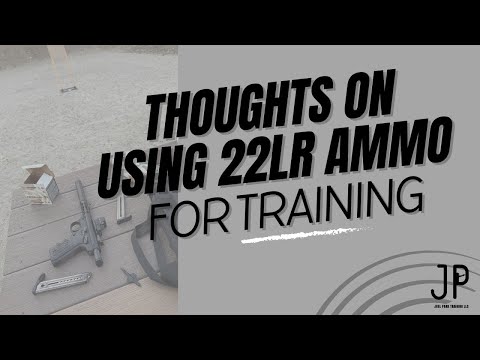
This video discusses the utility of .22LR ammunition for firearms training. While acknowledging its cost-effectiveness for high-volume practice, the instructor emphasizes that .22LR is not ideal for developing fundamental recoil management and grip pressures due to its minimal recoil. It is best suited for skills like target transitions and accuracy-focused drills where recoil is less of a factor. The instructor also warns against switching between .22LR and larger calibers within the same session due to the significant recoil difference.
Gun Laws by State
Read firearms regulations for all 50 states + D.C.
Find Gun Dealers
Search licensed FFL dealers near you.