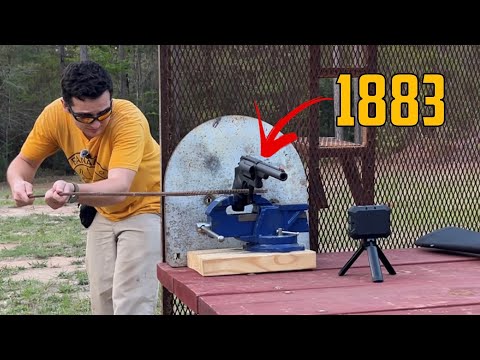
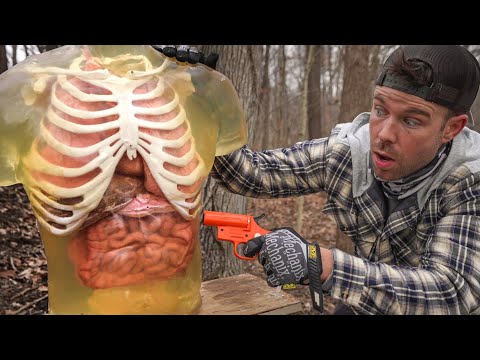
Blanks vs Human Head... Harmless or Dangerous???

Published on January 28, 2022
Duration: 8:39

This video provides a practical demonstration of the potential dangers of blank ammunition, moving beyond the common perception that they are harmless. Through tests on a specialized ballistic dummy head, the experiment reveals that even blanks can cause significant damage, including skull fractures and severe burns, especially at close range. The instructor, demonstrating high authority and safety awareness, highlights the risks associated with different calibers (.22 LR, 9mm, 5.56mm) and discusses secondary hazards like barrel debris and squib loads, emphasizing the critical importance of firearm safety protocols in all shooting scenarios.

Quick Summary

Blank ammunition is not harmless. Tests on a ballistic dummy head show that .22 LR, 9mm, and 5.56mm blanks can cause significant damage, including skull fractures, severe burns, and deep penetration, especially at close range. Muzzle blast and debris are key hazards.

Chapters

  1. 00:00Introduction & Blank Ammunition Explained
  2. 01:02Ballistics Dummy Head Introduction
  3. 01:28.22 LR Blank Testing
  4. 03:089mm Blank Testing
  5. 04:305.56mm Blank Testing
  6. 07:05Additional Safety Risks

Frequently Asked Questions

Are blank cartridges dangerous?

Yes, blank cartridges can be dangerous. While they lack a projectile, the muzzle blast, concussive force, and expelled debris can cause severe burns, fractures, and even launch fragments from the barrel, especially at close range. Safety protocols are crucial even with blanks.

What is the difference between live ammo and blank ammo?

Live ammunition contains a projectile (bullet) designed to travel a significant distance. Blank ammunition contains gunpowder but lacks a projectile, designed primarily to produce sound and flash, simulating a live fire event without a projectile. However, blanks still pose risks.

Can blank ammunition cause injury on a movie set?

Yes, blank ammunition can cause serious injury on a movie set. Incidents like those involving Brandon Lee and Alec Baldwin highlight the potential for blanks to cause harm due to muzzle blast, debris, or even a projectile lodged in the barrel from a previous shot.

What are the risks of firing a 5.56mm blank?

Firing a 5.56mm blank at close range can create a distinct burn pattern, cause deep penetration into soft materials like ballistics gel, and has the potential to fracture bone structures, such as the orbital bone demonstrated in testing.

Related News

All News →

More Training & Techniques Videos You Might Like

More from 1ShotTV

View all →