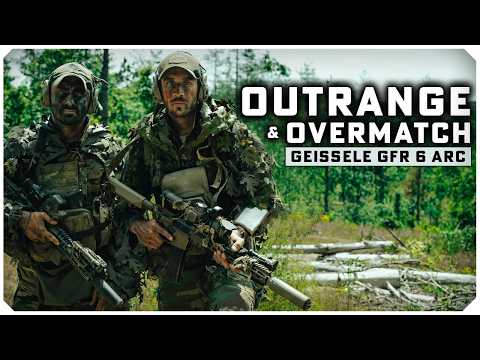
Civilian Guerrilla Marksman Skill Tree | Shoot, Move, Communicate

Published on April 4, 2026
Duration: 29:30

This video outlines a three-step skill tree for improving shooting performance, focusing on 'shoot, move, and communicate.' It emphasizes isolating the shooting skill through PRS competitions to build data and master modified positions. Fieldcraft and team communication are developed through courses like Tusk DM and NRL Hunter, respectively, highlighting the importance of low-light capability and efficient communication under pressure.


Quick Summary

To improve performance shooting, focus on the 'shoot, move, communicate' triad. Isolate the shooting skill through PRS competitions to master data building and modified positions. Develop fieldcraft and team communication via courses like Tusk DM and NRL Hunter, emphasizing low-light capability and efficient dialogue under pressure.

Chapters

  1. 00:00Introduction: Shoot, Move, Communicate
  2. 00:24The Challenge of Long-Range Marksmanship
  3. 01:11The Three-Step Skill Tree Process
  4. 01:31Ammunition Supply: Ammo Squared
  5. 01:53Supporting Gear: Wet Works
  6. 02:23Night Vision Capability: Steel Industries
  7. 02:43Isolating Shooting: The PRS Advantage
  8. 03:06What is PRS?
  9. 04:20PRS as a Skill Isolation Tool
  10. 05:02Rifle Precision: Bolt-Action vs. AR-15
  11. 05:33Recommended PRS Platforms
  12. 05:55What You Learn in PRS
  13. 06:17Building Data
  14. 07:05Shooting from Modified Positions
  15. 08:06Essential PRS Equipment
  16. 11:30Moving and Fieldcraft Aspect
  17. 11:36Developing Movement and Fieldcraft Skills
  18. 12:14Finding Training for Fieldcraft
  19. 13:11Tusk DM Course Overview
  20. 13:31Key Fieldcraft Learnings
  21. 14:345.56 AR Considerations
  22. 14:46Directing Fire in Darkness
  23. 14:55Ranging Without a Rangefinder
  24. 15:07Observation and Reporting
  25. 15:23Versatile Rifle Use
  26. 15:49Team Support and Calling Shots
  27. 16:34Fieldcraft Equipment Needs
  28. 17:09Suppressors: Silencer Shop
  29. 18:01Low-Light Shooting Equipment
  30. 18:41Ammunition and Data Building
  31. 19:17Faraday Bags for Signal Blocking
  32. 19:30Stability Tools: Tripods and Bags
  33. 20:07Chest Rig and Plate Carrier
  34. 20:30Additional Fieldcraft Gear
  35. 21:03The Communicate Component
  36. 21:08Learning Communication: NRL Hunter
  37. 21:25NRL Hunter: Team Dynamics
  38. 22:10What You Learn in NRL Hunter
  39. 22:36Efficient Communication Under Clock
  40. 22:51Gear Trading and Team Synergy
  41. 23:34Managing Emotions and Team Support
  42. 23:41Target Identification and Communication
  43. 24:23NRL Hunter Equipment Needs
  44. 24:31Rifle Requirements for NRL Hunter
  45. 24:53Data Management in NRL Hunter
  46. 25:28Minimalist NRL Hunter Gear
  47. 25:58Summary: PRS vs. Tusk DM vs. NRL Hunter
  48. 26:07Encouragement: Mastering Ballistics
  49. 26:34Novice Level and Community Reliance
  50. 26:55Personal Goal: Carbine Improvement
  51. 27:17Overcoming the Math Hurdle
  52. 28:09Conclusion: No Excuses for Limited Range
  53. 28:28Dad Advice: Enjoy the Present

Frequently Asked Questions

What are the three core components of performance shooting?

The three core components of performance shooting are shoot, move, and communicate. These elements must be integrated and executed without a second thought for optimal performance in hunting, competition, or self-defense scenarios.

How can I improve my long-range shooting skills?

To improve long-range shooting, isolate the 'shooting' skill through PRS competitions, learn to build and apply ballistic data using calculators and apps, and practice shooting from modified positions beyond the standard prone.

What is the benefit of participating in PRS competitions?

PRS competitions isolate the shooting skill by focusing on hitting small targets at long distances. This environment helps shooters identify their own flaws rather than equipment limitations, leading to more precise and consistent shooting.

Why is team communication important in shooting?

Team communication is vital for finding, ranging, and engaging targets efficiently, especially in competitions like NRL Hunter. It involves constant dialogue about target location, distance, dope, and shot corrections under time pressure.

What equipment is essential for improving long-range marksmanship?

Essential equipment includes an accurate rifle (sub MOA), appropriate ammunition, a quality optic, a bipod, stability bags, and tools for data management like a Kestrel or ballistics apps. For fieldcraft, suppressors and night vision are also crucial.

More Training & Techniques Videos You Might Like

More from Dirty Civilian

View all →