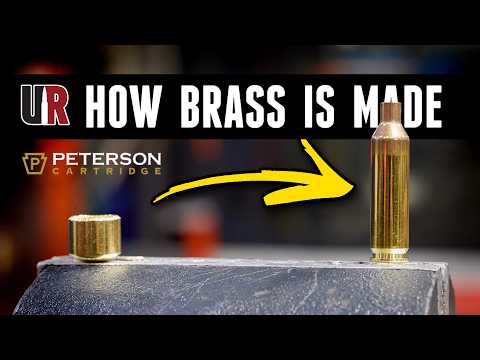
Excessive Headspace Solved: Peterson Longs (7Rem & 300 WM)

Published on June 22, 2025
Duration: 15:04

This video explains the common issue of excessive headspace in new brass for belted magnum cartridges like the 7mm Remington Magnum and .300 Winchester Magnum. It details how the design of these cartridges, with their belts, can lead to significant stretching of the case shoulder upon firing, impacting longevity and accuracy. The presenter introduces Peterson Long Magnum brass as a solution, featuring a forward-set shoulder to minimize initial stretch. Practical measurements and comparisons are provided, demonstrating the benefits of this specialized brass for reloaders seeking improved performance and case life.


Quick Summary

Excessive headspace in belted magnum cartridges like the 7mm Rem Mag and .300 Win Mag leads to case stretching, reducing longevity and accuracy. Peterson Long Magnum brass features a forward-set shoulder to minimize this initial gap, resulting in less stretch and improved performance for reloaders.

Chapters

  1. 00:03Introduction to Belted Magnum Headspace Issues
  2. 00:27Gavin Gear from Ultimate Reloader
  3. 00:36Belted vs. Non-Belted Magnums
  4. 00:55Understanding Belted Magnum Headspace
  5. 01:07Diagram of Belted Magnum Headspace Points
  6. 02:05Downsides of Excessive Headspace
  7. 02:45SAAMI Specs for .300 Win Mag Headspace
  8. 03:13Headspace Comparator Explained
  9. 03:51Chamber vs. Cartridge Tolerances
  10. 04:55Calculating Minimum and Maximum Clearance
  11. 05:20Ideal Shoulder Bump for Reloading
  12. 05:29Headspace Specs for 7mm Rem Mag
  13. 05:57Introducing Peterson Long Magnums
  14. 06:36Measuring Peterson Long Brass
  15. 06:557mm Rem Mag Brass Comparison
  16. 07:52.300 Win Mag Brass Comparison
  17. 08:20Reloading Setup and Components
  18. 09:20Rifles Used for Testing
  19. 10:17Shooting Impressions and Headspace Check
  20. 10:29Measuring Shoulder Blow-Forward
  21. 11:027mm Rem Mag Shoulder Blow Measurement
  22. 11:32.300 Win Mag Shoulder Blow Measurement
  23. 12:16Impact on Longevity and Precision
  24. 12:31Controlling Shoulder Bump After Fire-Forming
  25. 13:00Recommendation for Peterson Long Magnum Brass
  26. 13:34Viewer Opinions and Discussion
  27. 14:14Conclusion and Call to Action

Frequently Asked Questions

What causes excessive headspace in belted magnum cartridges?

Excessive headspace in belted magnum cartridges like the 7mm Rem Mag and .300 Win Mag is primarily due to the manufacturing tolerances between the cartridge's shoulder and the chamber's shoulder. The belt provides a primary headspacing point, but the large gap at the shoulder allows the case to stretch significantly upon firing, reducing its lifespan and potentially affecting accuracy.

How does Peterson Long Magnum brass address excessive headspace?

Peterson Long Magnum brass is designed with its shoulder pushed forward compared to standard specifications. This effectively reduces the initial air gap or headspace between the cartridge shoulder and the chamber shoulder, minimizing the amount of stretch the brass undergoes during the first firing and subsequent firings.

What are the benefits of using Peterson Long Magnum brass?

Using Peterson Long Magnum brass offers significant benefits, including improved case longevity by reducing stretching, and enhanced precision due to more consistent case dimensions. This leads to better overall performance and reliability for reloaders of belted magnum cartridges.

What is the ideal shoulder bump for precision rifle cartridges?

For precision rifle cartridges, reloaders typically aim for a shoulder bump of about 2.5 thousandths of an inch. This ensures reliable chambering without excessive stretching of the brass. Peterson Long Magnum brass helps achieve this by starting with less headspace, allowing for controlled bumps after fire-forming.

More Training & Techniques Videos You Might Like

More from Ultimate Reloader

View all →