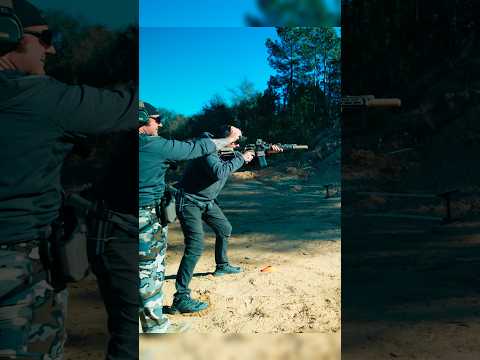
How to Shoot an AR-15 Better in 4 Steps ft. S.W.A.T. Vet Bill Blowers

Published on October 5, 2020
Duration: 12:18

This guide details four key techniques for improving AR-15 shooting performance, presented by U.S. Army and SWAT veteran Bill Blowers. It covers optimal support hand placement, buttstock positioning for leverage and recoil management, adopting a natural fighting stance, and advanced recoil control through active pressure. The guide also includes two drills to diagnose and improve recoil management and shooting cadence for enhanced speed and accuracy.

Quick Summary

Improve your AR-15 shooting by mastering four key techniques: place your support hand far forward on the handguard for leverage, position the buttstock high in your shoulder pocket for recoil alignment, adopt a natural fighting stance for balance, and apply active pressure with your support arm and shoulder for superior recoil management.

Chapters

  1. 00:00Introduction to 'Battle of the Bills'
  2. 02:11Tip 1: Support Hand Placement
  3. 03:36Tip 2: Buttstock Position
  4. 04:38Tip 3: Shooting Stance
  5. 05:25Tip 4: Recoil Management Nuances
  6. 05:50Drill One: Recoil Management
  7. 09:14Drill Two: Cadence and Accuracy

Frequently Asked Questions

What is the most effective support hand placement for shooting an AR-15?

For optimal leverage and control when shooting an AR-15, place your support hand as far forward on the handguard as possible. This allows for quicker target transitions and a more stable platform to stop the weapon precisely after firing.

How should the buttstock be positioned for better AR-15 shooting?

Adjust the buttstock for length and height to maximize leverage. Ensure it's seated high in your shoulder pocket. This alignment helps direct the recoil impulse straight back through your body's center of balance, improving control.

What is the recommended shooting stance for an AR-15?

Instead of a specialized, rigid shooting stance, Bill Blowers recommends adopting a natural fighting stance. This provides the best overall balance and stability, crucial for managing recoil and reacting effectively to dynamic threats.

How can I improve recoil management with my AR-15?

Effective recoil management involves applying significant backward pressure with your support arm and using an 'active shoulder' to drive into the gun. This technique absorbs recoil without causing muscle fatigue or weapon shake.

Related News

All News →

More Training & Techniques Videos You Might Like

More from TFB TV

View all →