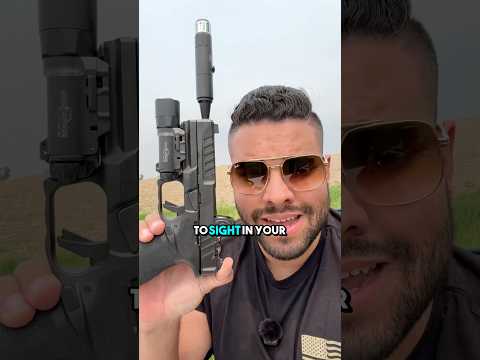
How To Sight In A Rifle Scope

Published on April 9, 2021
Duration: 14:06

This guide details how to properly sight in a rifle scope, a critical process for accurate shooting. It covers obtaining a rough zero at close range, boresighting techniques, and the final precision zeroing at 100 yards. The explanation emphasizes using appropriate ammunition and understanding scope adjustments like MOA for effective point-of-impact alignment. Instruction is provided by Chris Baker of Lucky Gunner Ammo.

Quick Summary

To sight in a rifle scope, start with a rough zero at 10-15 yards using inexpensive ammo. Then, move to your desired zero distance (like 100 yards) and use your intended ammunition. Fire groups, identify the center, and adjust your scope's windage and elevation turrets accordingly, understanding MOA click values.

Chapters

  1. 00:00Introduction to Sighting In
  2. 00:42The Rough Zero
  3. 01:41Boresighting Techniques
  4. 02:36Ammo Selection for Zeroing
  5. 03:57Scope Adjustments Explained
  6. 05:29Understanding MOA and Click Values
  7. 07:24Choosing a Zero Distance
  8. 08:09Final Zeroing at 100 Yards
  9. 10:26Adjustment Correction and Finalizing

Frequently Asked Questions

What is the first step in sighting in a rifle scope?

The first step is to obtain a rough zero at a close distance, typically 10 to 15 yards. This ensures your shots are hitting the paper when you move to longer distances, allowing for easier initial adjustments.

How do you boresight a rifle scope?

Boresighting involves looking through the rifle's bore to align the target, then adjusting the scope's crosshairs to match that alignment. This is often done with the bolt removed on bolt-action rifles or AR-15 uppers for a clear view.

What is MOA and how does it relate to scope adjustments?

MOA stands for Minute of Angle. One MOA is roughly one inch at 100 yards. Scopes often have turrets that click in fractions of MOA, like 1/2 MOA, meaning two clicks adjust the impact by one inch at 100 yards.

Should I use the same ammo for rough zeroing and final zeroing?

No, it's best to use inexpensive range ammo for the initial rough zero to save money. For the final zero, switch to the specific ammunition load that you intend to use for hunting, competition, or self-defense.

Related News

All News →

More Training & Techniques Videos You Might Like

More from Lucky Gunner Ammo

View all →