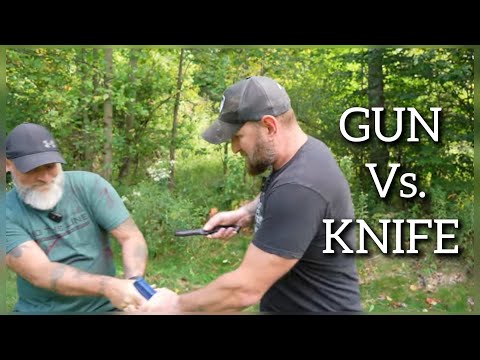
Most Retention Shooting Is Taught Wrong—Here’s The Right Way (With Craig Douglas)

Published on January 19, 2026
Duration: 12:40

This guide outlines Craig Douglas's four-step progression for retention shooting, emphasizing a crawl-walk-run methodology. Developed from 33 years of experience, including undercover law enforcement, these techniques address extreme close-quarters encounters where traditional stances are impossible. The progression moves from visual checks to relying on tactile feedback and culminates in a single command to draw and fire, prioritizing safety and repeatability.

Quick Summary

Retention shooting is a vital skill for extreme close-quarters encounters where an attacker is on top of you, making traditional stances impossible. Developed by Craig Douglas, the technique follows a four-step progression: visual checks, no checks, draw then fire, and single command. A downward muzzle angle and the 'thumb-pectoral index' are key safety and control elements.

Chapters

  1. 00:00Introduction to Retention Shooting
  2. 00:34Craig Douglas's Background
  3. 01:05The Training Progression
  4. 01:17First Iteration: Visual Checks
  5. 03:52Safety Rules in Retention
  6. 05:38Second Iteration: No Checks
  7. 06:16The Downward Angle Rationale
  8. 07:21Third Iteration: Draw Then Fire
  9. 08:08Critique of Rotated Gun Positions
  10. 09:50Fourth Iteration: Single Command
  11. 11:11Instructional Methodology

Frequently Asked Questions

What is retention shooting and when is it necessary?

Retention shooting is a critical skill for extreme close-quarters encounters, such as when an attacker is physically on top of you. It's a last-ditch effort to access and fire your weapon when traditional shooting stances are impossible due to entanglement or grappling.

What is Craig Douglas's recommended progression for learning retention shooting?

Craig Douglas advocates a 'crawl, walk, run' progression: 1) Visual checks, 2) No checks (relying on tactile feedback), 3) Draw then fire (with separate commands), and 4) Single command (draw and fire combined). This builds a safe and repeatable foundation.

Why is a downward muzzle angle important in retention shooting?

A downward muzzle angle is crucial in retention shooting to deconflict the support hand, which is often active and can be in front of the muzzle during a struggle. It also provides a known backstop, typically the ground, for any potential pass-through shots.

What is the 'thumb-pectoral index' in retention shooting?

The 'thumb-pectoral index' is a key technique in retention shooting involving a high elbow and locked wrist. The thumb of the shooting hand rests against the pectoral muscle, establishing a consistent reference point for drawing and firing the weapon securely.

Related News

All News →

More Training & Techniques Videos You Might Like

More from Tenicor

View all →