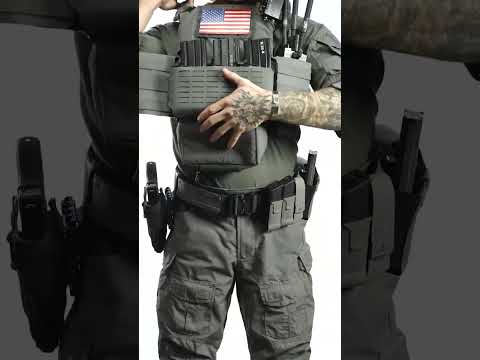
Quick Tip: Deliberate Practice Speed Reload

Published on January 26, 2017
Duration: 3:02

This guide details Travis Haley's 'Deliberate Practice' methodology applied to speed reloads. It emphasizes focusing on the process and mechanics over the goal, starting slow and gradually increasing speed. The drill involves timed reloads, starting at 5 seconds and decreasing, while minimizing wasted movement and maintaining proper form. This approach aims to build expert-level proficiency even for non-experts.


Quick Summary

Deliberate practice in firearms training means focusing on the processes of a skill to achieve expert-level execution, rather than subjective 'perfect practice.' Start slow with drills like timed reloads, meticulously focusing on each movement, and gradually decrease the time as proficiency grows to build efficiency and mastery.

Chapters

  1. 00:00Introduction to Deliberate Practice
  2. 00:12Deliberate vs. Perfect Practice
  3. 00:19What is Expert Level Practice?
  4. 00:33Focusing on Process, Not Just Goal
  5. 00:38Speed Reload Drill Example
  6. 00:46Setting Up the Drill (Target, Stance)
  7. 00:56Firearm Setup and Tac Reload
  8. 01:08Starting Position: Relaxed Ready
  9. 01:13Entering Focus Mode & 5-Second Reload
  10. 01:31Completing the Drill: Resetting the Gun
  11. 01:51Progressing to 4-Second Reload
  12. 02:04Progressing to 3-Second Reload
  13. 02:14Progressing to 2-Second Reload
  14. 02:24Feeling Time Differently Through Deliberate Practice
  15. 02:31Taking Breaks and Repeating the Process
  16. 02:41Final Reminder: Deliberate Practice in Training

Frequently Asked Questions

What is the difference between deliberate practice and perfect practice in firearms training?

Deliberate practice focuses on mastering the specific processes and mechanics of a skill to achieve expert-level execution, even if you're not yet an expert. Perfect practice is subjective and based on individual preferences, which may not lead to optimal performance.

How can I apply deliberate practice to my firearm training?

To apply deliberate practice, focus on the step-by-step processes of a skill, like a speed reload. Start slow, meticulously executing each movement, and gradually decrease your time as you become more proficient, ensuring efficiency and minimizing wasted motion.

What is the recommended starting point for the deliberate practice speed reload drill?

The drill recommends starting with a generous time limit, such as five seconds, for a single reload. This allows ample time to focus on the mechanics and processes without pressure, before gradually reducing the time allowance.

Can deliberate practice be used for skills other than speed reloads?

Yes, the principles of deliberate practice are highly versatile. They can be applied to various firearm manipulations, including tactical reloads, clearing malfunctions, drawing from a holster, and even complex carbine or shotgun operations.

More Training & Techniques Videos You Might Like

More from Haley Strategic Partners

View all →