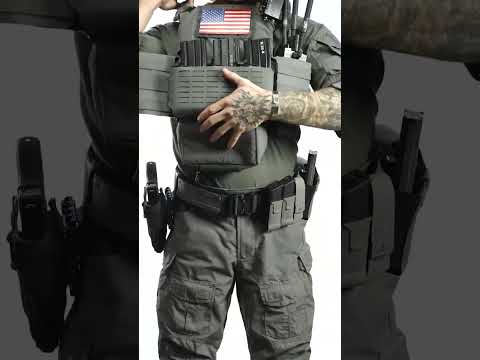
Quick Tips: Setting up your 2 point sling

Published on December 8, 2016
Duration: 1:13

This guide, presented by Travis Haley of Haley Strategic Partners, details the proper setup and manipulation of a two-point sling for tactical firearms like the AR-15, SCAR, and AK. It emphasizes correct positioning to avoid slack, secure weapon retention, and efficient movement in and out of the sling, crucial for high-ready stances and tactical scenarios. The instruction highlights the importance of practice for seamless operation.

Quick Summary

Expert Travis Haley advises on two-point sling setup, emphasizing a secure 'pivot index point' with the stock in the shoulder and avoiding slack. Proper attachment on ARs (end plate) and SCAR/AKs (loops) allows full range of motion. Practicing exiting and re-entering the sling ensures quick manipulation for tactical readiness.

Chapters

  1. 00:01Intro & Sling Positioning
  2. 00:30High Ready & Weapon Manipulation
  3. 00:50Exiting & Re-entering Sling
  4. 01:03Conclusion

Frequently Asked Questions

How should a two-point sling be positioned for optimal weapon control?

A two-point sling should be adjusted to maintain a 'pivot index point' with the stock in the shoulder. Avoid excessive slack or hanging too low, ensuring the weapon is securely held at an appropriate height for immediate use.

Where should a two-point sling be attached on different rifle platforms?

For AR-style rifles, attach the sling to the rear receiver end plate. On platforms like the SCAR or AK, utilize the designated loops. This placement ensures a full range of motion.

What is the importance of practicing sling manipulation?

Practicing manipulating yourself out of and back into the sling is crucial. It ensures the adjustment handle is quick to operate and builds muscle memory for seamless transitions in tactical situations.

What are common mistakes to avoid when setting up a two-point sling?

Common mistakes include leaving the sling too slack or too low, which compromises weapon retention and mobility. Additionally, failing to practice manipulation can lead to delays when needing to quickly deploy or adjust the weapon.

More Training & Techniques Videos You Might Like

More from Haley Strategic Partners

View all →