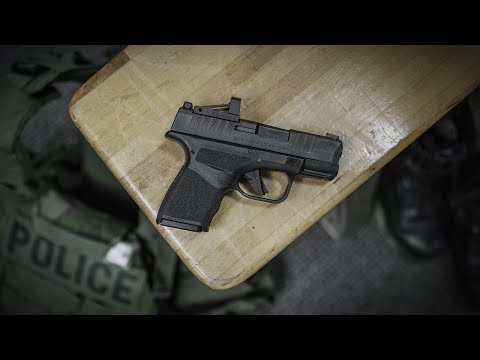
Springfield Industry Day Patrick Sweeney Rob Talk Triggers

Published on March 14, 2018
Duration: 4:34

This guide, informed by experts Patrick Sweeney and Rob Leatham, breaks down the nuances of firearm trigger types. It explains how to evaluate triggers on 1911s, DA/SA, and striker-fired platforms, emphasizing that 'good' is situational. Proper technique tailored to each trigger type is crucial for accuracy.

Quick Summary

Firearm trigger quality is subjective and application-dependent. A 1911's 'clean' surprise break differs from a DA/SA's 'smoothness' or a striker-fired system's balanced pull. Experts like Patrick Sweeney and Rob Leatham emphasize that mastering technique specific to each trigger type is paramount for accurate shooting, regardless of the firearm's inherent quality.

Chapters

  1. 00:07Intro: What is a Good Trigger?
  2. 00:33The 'Clean' 1911 Trigger
  3. 01:061911 Trigger Pull Weight & Context
  4. 01:55DA/SA Triggers: Smoothness Matters (XDE)
  5. 02:43Striker-Fired Triggers: A Balanced Approach (XDS)
  6. 04:05Conclusion: Subjectivity & Technique

Frequently Asked Questions

What defines a 'good' firearm trigger?

A 'good' trigger is subjective and depends on the firearm's intended use. For a 1911, it's a 'clean' surprise break. For DA/SA, it's 'smoothness' without grit. For striker-fired, it's often a balance, sometimes compared to a double-action revolver.

How does a 1911 trigger differ from a DA/SA or striker-fired trigger?

A 1911 trigger is known for its clean, surprise break. DA/SA triggers are judged on smoothness, with distinct double and single-action pulls. Striker-fired triggers offer a consistent pull, often shorter and lighter than DA, and are sometimes treated like a short-stroke double-action revolver.

Is a heavier trigger pull always worse?

Not necessarily. While heavy triggers can hinder speed, a 7 lb trigger on a historical 1911 could still be 'clean' and effective for defensive purposes. The ideal pull weight is situational and depends on the firearm's application.

Why is proper technique important for different trigger types?

Using the wrong technique for a specific trigger type, like applying excessive force or anticipating the break, will lead to poor shooting results. Mastering technique tailored to the trigger system is crucial for accuracy and control.

Related News

All News →

More Training & Techniques Videos You Might Like

More from SPRINGFIELD ARMORY

View all →