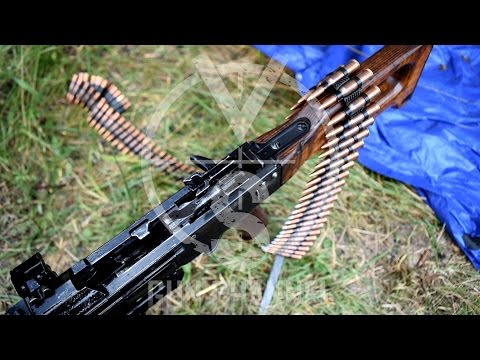
Why You Should NEVER Use WD-40 on Guns

Published on June 4, 2026
Duration: 14:52

This video explains why common household products like WD-40, transmission fluid, and brake fluid are unsuitable for firearm maintenance. It details the four key criteria for selecting a proper firearm lubricant: temperature range, gunk handling, system compatibility, and side effects. The instructor emphasizes that WD-40's residue and water-displacing properties can lead to operational issues and rust, while other alternatives have temperature or compatibility problems. Firearm-specific CLPs are recommended for their balanced properties and ease of use.


Quick Summary

WD-40 is not recommended for firearms because it leaves a persistent, gummy residue that attracts dirt and debris, hindering operational components. It also displaces water but can lead to rust formation by trapping moisture in metal-on-metal contact points, especially during storage. Firearm-specific CLPs are preferred for their balanced properties and ease of use.

Chapters

  1. 00:00Introduction: The WD-40 Debate
  2. 01:02Right to Bear Sponsorship
  3. 02:04General Rule for Gun Cleaning
  4. 03:00Corrosive Bore Cleaners
  5. 04:10CLP: Clean, Lube, Protect
  6. 05:00Extreme Example: Bore Cleaner
  7. 05:30Conflating Cleaning and Lubing
  8. 06:20Firearms-Specific Products
  9. 07:00Ultrasonic Cleaners and Aluminum
  10. 08:00Four Criteria for Lubricant Selection
  11. 09:30Temperature Operational Range
  12. 10:00Capacity for Gunk
  13. 11:00Operating System Concerns
  14. 12:00Product Suggestions: Croyal
  15. 12:40Product Suggestions: Transmission Fluid
  16. 15:00Product Suggestions: Red Brake Fluid
  17. 16:50The Real Reason: WD-40 Explained
  18. 18:00WD-40's Residue Problem
  19. 19:30WD-40 and Rust Formation
  20. 21:00WD-40 and Wooden Stocks
  21. 22:30Conclusion: Why Firearm-Specific CLP
  22. 24:00Final Thoughts on Lubricants

Frequently Asked Questions

Why is WD-40 not recommended for cleaning firearms?

WD-40 is not recommended for firearms because it leaves a persistent, gummy residue that attracts dirt and debris, hindering operational components. It also displaces water but can lead to rust formation by trapping moisture in metal-on-metal contact points, especially during storage.

What are the key criteria for choosing a firearm lubricant?

When selecting a firearm lubricant, consider its operational temperature range, its ability to grab and clear gunk without leaving residue, compatibility with the firearm's specific operating system, and any potential negative side effects on materials or function.

Are transmission fluid or brake fluid safe to use on guns?

No, transmission fluid and brake fluid are not safe for firearms. Transmission fluid has problematic temperature ranges, becoming too viscous in cold and breaking down when hot. Brake fluid can emulsify with water, causing significant issues within the firearm's mechanism.

What is the best type of product for cleaning and lubricating firearms?

Firearm-specific CLPs (Clean, Lubricate, Protect) are generally recommended. They are formulated to clean, lubricate, and protect firearm components effectively, considering temperature ranges, material compatibility, and the specific demands of firearm operation, while simplifying the maintenance process.

Related News

All News →

More Training & Techniques Videos You Might Like

More from The VSO Gun Channel

View all →