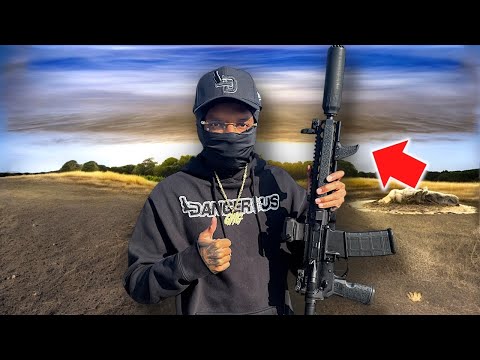
You’re Using The WRONG Ammo In Your Gun

Published on June 25, 2024
Duration: 26:02

This video explains the critical relationship between a rifle's twist rate and ammunition bullet weight for optimal stabilization and accuracy. Matching heavier bullets with faster twist rates (lower numbers like 1:7) and lighter bullets with slower twist rates (higher numbers like 1:12) is crucial for predictable trajectories. The presenters emphasize that using the wrong ammunition can lead to poor accuracy, keyholing, or even bullet instability, especially at longer distances.

Quick Summary

Matching your rifle's twist rate to your ammunition's bullet weight is essential for accuracy. Faster twist rates (lower numbers like 1:7) stabilize heavier bullets, while slower twist rates (higher numbers like 1:12) are for lighter bullets. Using the wrong combination can cause under or over-stabilization, leading to poor performance.

Chapters

  1. 00:00Introduction: The Wrong Ammo Problem
  2. 00:30Why Ammo Matters: Twist Rate vs. Bullet Weight
  3. 01:31Understanding Rifle Twist Rate
  4. 02:08Bullet Spin and Stabilization Explained
  5. 03:28Common AR-15 Twist Rates (1:12, 1:8, 1:7)
  6. 04:10Historical Twist Rate Changes (M16)
  7. 04:50Visualizing Bullet Weight Difference (55gr vs 77gr)
  8. 05:51Choosing Ammo for Different Purposes
  9. 06:35Under-stabilization vs. Over-stabilization
  10. 07:19Common Mistakes: Blaming the Gun
  11. 07:48The Role of Distance in Ammo Choice
  12. 08:12Ammo Recommendations for AR-15 Twist Rates
  13. 09:4455 Grain Ammo with Fast Twist Rates (1:7, 1:8)
  14. 11:26Extreme Examples: 50 Caliber Projectiles
  15. 13:0486 Blackout & 1:3 Twist Rate
  16. 13:34Subsonic vs. Supersonic Ballistics
  17. 14:34300 Blackout Ammunition (145gr, 200gr)
  18. 15:12Boat Tail Projectiles Explained
  19. 16:40300 Blackout Twist Rate Considerations
  20. 18:1730 Caliber Projectiles & Twist Rates (308, 7.62x39)
  21. 19:49308 Projectile Weights (147gr vs 168gr)
  22. 20:30Velocity's Effect on Stabilization
  23. 21:16Complexity of Ballistic Science
  24. 22:01Summary: Picking the Right Ammunition
  25. 23:04Handloads vs. Factory Ammunition
  26. 23:27Consistency of Ammunition
  27. 24:10Favorite Ammunition & Final Thoughts

Frequently Asked Questions

What is rifle twist rate and why is it important for ammunition selection?

Rifle twist rate, like 1:7, indicates how many inches of barrel travel it takes for the rifling to make one full rotation. This spin stabilizes the bullet. Matching the twist rate to the bullet's weight and length is crucial; faster twists (lower numbers) stabilize heavier bullets, while slower twists (higher numbers) are for lighter bullets, ensuring accuracy.

How does bullet weight affect the required rifle twist rate?

Heavier and longer bullets require a faster spin to remain stable in flight. Therefore, they need a rifle with a faster twist rate (a lower number, like 1:7 or 1:5). Lighter and shorter bullets can be stabilized by slower twist rates (a higher number, like 1:12 or 1:9).

What happens if you use the wrong bullet weight for your rifle's twist rate?

Using the wrong ammunition can lead to poor accuracy. If a bullet is too light for a fast twist rate, it can become over-stabilized and yaw. If a bullet is too heavy for a slow twist rate, it can be under-stabilized, leading to keyholing and erratic flight paths.

What are common twist rates for AR-15 rifles and what ammo do they pair with?

Common AR-15 twist rates include 1:7, 1:8, and 1:9. A 1:7 twist is versatile and handles heavier bullets (62-77 grain) well. A 1:8 is a good compromise for common weights, while a 1:9 is generally best for lighter bullets (around 55 grain).

Related News

All News →

More Training & Techniques Videos You Might Like

More from ClassicFirearms

View all →