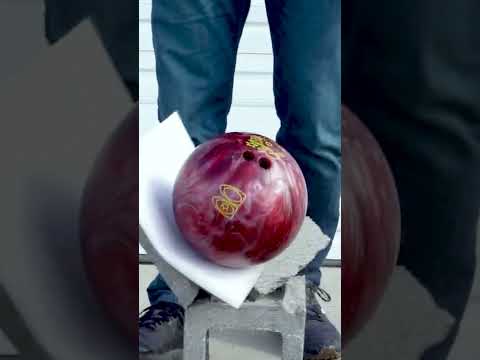
This video provides a comprehensive test of a budget-friendly Temu ballistic mask, evaluating its performance against a wide range of handgun calibers. The host, a tactical gear reviewer, demonstrates the mask's ability to stop projectiles up to .454 Casull but highlights significant backface deformation, indicating a high risk of blunt force trauma. The review emphasizes the importance of NIJ certification and the potential dangers of uncertified protective gear.
This video presents a critical self-defense scenario where an individual's vehicle is attacked with a blunt object. It emphasizes the importance of situational awareness and understanding legal self-defense principles when faced with an immediate, violent threat. The USCCA, a recognized authority in concealed carry and self-defense education, highlights the need for viewers to consider their response options in such high-stress situations.
This video from Kentucky Ballistics explores the 'lethality' of a PowerGolf ballistic golf club. Expert Scott demonstrates its piston-driven mechanism, powered by .25 caliber blanks, and its adjustable range settings from 75 to 200 yards. The testing includes destruction of various targets and a simulated lethality test on a ballistic dummy, showcasing significant blunt force trauma potential.
Garand Thumb, with expert Paul Van Dunk, conducts rigorous testing on a ballistic hoodie using a realistic dummy. The Level 3A soft armor demonstrates surprising effectiveness against handgun and magnum rounds, though significant blunt force trauma is noted. Rifle rounds ultimately penetrate the armor, establishing its limitations.
Garand Thumb provides an in-depth review of the US Army's Integrated Head Protection System (IHPS), comparing it to the Enhanced Combat Helmet (ECH). The analysis highlights the IHPS's superior ballistic performance against rifle threats and improved blunt force trauma protection, while noting its lighter weight and boltless design. The review includes practical testing with various calibers and firearms, offering a comprehensive assessment of its effectiveness.
This video provides an expert-level demonstration of the lethality of pistol whipping, utilizing a ballistic dummy and various firearms including the Hi-Point C9 and Glock 23. The host, an experienced shooter and ballistic tester, details different striking techniques and their effects, highlighting the significant blunt force trauma inflicted. The demonstration concludes by comparing the damage from physical strikes to that of projectile impact, emphasizing the firearm's primary function.
This video demonstrates a point-blank 9mm test against a body armor vest that has sustained previous impacts from various calibers. The test, conducted with a Springfield Hellcat Pro, shows the vest catching the round but transferring significant blunt force trauma to a bucket placed behind it, highlighting the importance of understanding energy transfer beyond simple penetration.
This video provides an expert-level assessment of a BulletSafe Level 3A vest's performance against various 12-gauge shotgun rounds. The 1ShotTV host, demonstrating high authority and extensive experience, details the internal damage caused to a ballistic dummy even when the vest stops projectiles. The test highlights the limitations of soft body armor against high-energy slugs and buckshot, emphasizing blunt force trauma as a significant factor.
This YouTube Shorts video from Predator Armor showcases their Non-Ballistic Trauma Pads. The description emphasizes their function in protecting against injuries caused by back face deformation by dissipating impact energy and reducing transmitted force. The pads are designed to be comfortable when worn with body armor, utilizing high-density, flexible materials to absorb impact and reduce blunt force trauma. A link to the full video and the product on their website is provided.
This video from Garand Thumb provides an expert-level analysis of whether Level 4 body armor can stop a .50 caliber round. The host, demonstrating high authority, tests various scenarios using a Steyr HS .50 M1 rifle and specialized ammunition against a Ballistic Dummy Lab torso equipped with Armor Shop Level 4 plates. The tests reveal that while multiple plates can stop a standard .50 BMG FMJ round, the resulting blunt force trauma is likely fatal. Specialized rounds like the Raufoss (APHEI) are shown to be unstoppable by conventional body armor.
This expert guide details the testing of high-caliber 'elephant guns' against Level IV body armor, demonstrating blunt force trauma potential. Lead Firearms Instructor Scott from Kentucky Ballistics uses a ballistic dummy to visualize catastrophic internal damage, even when armor stops the projectile. The tests highlight that while armor may prevent penetration, extreme energy transfer can still be lethal.
This video from GBRS Group details rigorous testing of their Level III ICW Special Threat Plate at Freedom Valley Training. Expert analysis covers performance against 5.56mm, 9mm, and M855 green tip rounds, emphasizing the critical role of backface deformation and the benefits of a soft armor backer in mitigating blunt force trauma. The plate is deemed suitable for everyday carry and general threat protection.
Gun Laws by State
Read firearms regulations for all 50 states + D.C.
Find Gun Dealers
Search licensed FFL dealers near you.