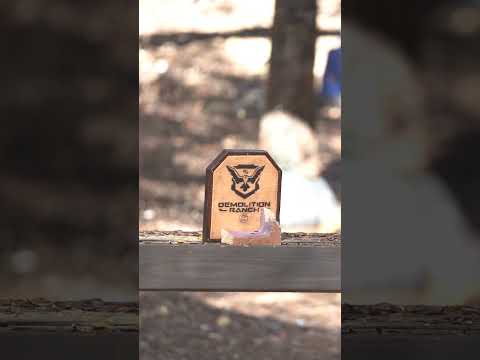
This video explores DIY body armor solutions using common household items and budget-friendly materials, testing their effectiveness against .22LR and 9mm projectiles. Participants attempted to protect pumpkins using items purchased from Dollar General, including water jugs, hair spray, soda bottles, dirt, and a cast iron skillet, with varying degrees of success.
This video tests the ballistic resistance of a DIY armor setup consisting of ceramic plates layered on a stack of paper. It demonstrates that this configuration can stop .22 LR and 9mm FMJ rounds but is penetrated by a 7.62x39mm round from an AK-47, even with multiple plates. The experiment highlights the limitations of simple DIY ballistic solutions against more powerful calibers.
This video from Yee Yee Life tests the ballistic resistance of 500 sheets of Hammermill copy paper against various handgun calibers. The paper successfully stopped 9mm and .45 ACP rounds but was penetrated by a .44 Magnum "bear load." The host demonstrates enthusiastic and experimental firearm handling with proper safety precautions.
This video from DemolitionRanch showcases an experimental test of homemade body armor against a .338 slug, specifically using 8.6 Blackout subsonic rounds. The host, Matt Carriker, demonstrates the effectiveness of various layered materials, including a composite, in stopping or significantly slowing the projectile. The test highlights the potential of DIY solutions in ballistic protection, though it's presented in an informal, experimental context.
This video details an experiment where the creators built their own body armor using layered hex tiles and Flex Seal. They then proceeded to test its effectiveness against various firearms, including .308, 5.56, .45 ACP, 9mm, .380 ACP, .22 Short, and shotgun slugs. The results consistently showed that the homemade armor failed to stop any of the tested projectiles, with most rounds penetrating all layers.
This video tests the ballistic resistance of a DIY welding blanket armor against a .44 Magnum round. While a 9mm round was stopped with minimal back face deformation, the .44 Magnum presented a more significant challenge. The armor successfully stopped the .44 Magnum on a center mass shot, with a back face deformation of 39mm, which is within acceptable standards. However, an edge shot resulted in material blowout, indicating a potential vulnerability at the perimeter.
This video demonstrates the failure of homemade rifle-rated body armor created by a viewer. The armor, constructed with materials like tinfoil, construction paper, pennies, and possibly ceramic, was tested against various handgun and rifle calibers. While it successfully stopped 9mm, 10mm, and 5.7x28mm rounds, it failed against common rifle rounds like .223 Remington, 7.62x39mm, .45-70 Government, and .30-30 Winchester, only stopping a .22 Long Rifle.
This video serves as a response to viewer comments questioning the effectiveness of DIY armor. The creator demonstrates that a .357 Magnum round did not penetrate the layered Dollar Tree materials, explaining that apparent 'holes' were actually scuff marks from the tape hitting a rock. The material successfully stopped the projectile.
This YouTube Short appears to be a DIY project focusing on modifying or testing the protective capabilities of armor made from Dollar Tree materials. The title 'Cutting Open Dollar Tree DIY Armor' suggests an experimental approach, possibly involving testing the armor's resilience against impacts or damage. While the title mentions 'armor,' the specific context in relation to firearms is not explicitly stated, but the act of 'cutting open' could imply testing its resistance to ballistic materials or projectiles. Without further context from a transcript, the primary focus seems to be on a hands-on, experimental creation rather than a direct firearms review or demonstration.
This guide details the construction of DIY armor using inexpensive materials sourced from Dollar Tree, including baking pans, rocks, and duct tape, with a total cost under $15. The video demonstrates ballistic testing of the finished product at 7 yards against both 9mm and .357 Magnum rounds, showcasing surprising effectiveness. The host, 704 Tactical, emphasizes safe firearm handling throughout the experimental process.
This video showcases an experimental body armor constructed from metal keys embedded in epoxy resin, tested against various firearm calibers. The creator, Edwin Sarkissian, demonstrates its effectiveness against handgun rounds like the .357 Magnum and .50 AE, as well as rifle rounds such as 7.62x39mm and 5.56mm M855. However, it ultimately fails against the more powerful 8mm Mauser round. The demonstration highlights the potential of improvised materials for ballistic protection, while also illustrating their limitations.
This video investigates the ballistic resistance of stacked plastic plates, specifically testing if they can stop .22LR and .22WMR ammunition after eliminating air gaps. The creator mentions having fun during the current ammo shortage and emphasizes safe, controlled shooting practices on private property. They also disclaim any affiliation with retailers or manufacturers and state that no firearms or ammunition are offered for sale.
Gun Laws by State
Read firearms regulations for all 50 states + D.C.
Find Gun Dealers
Search licensed FFL dealers near you.