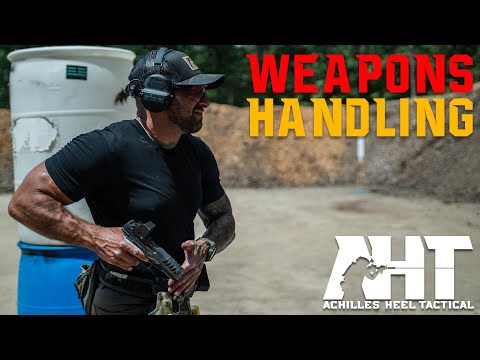
This guide details advanced firearm handling techniques taught by Paul Costa of Achilles Heel Tactical. It covers three primary draw strokes (Stab, Snatch, Scoop) and emphasizes the use of the Command Drill with progressively shorter par times to quantify and improve draw speed. The instruction also highlights the critical importance of consistent indexing and efficient reload mechanics, advocating for mastery through dry-fire practice.
This training drill, presented by Jeff from Tenicor, emphasizes improving draw speed not by chasing arbitrary par times, but by focusing on consistent indexing and visual precision. The core principle is to achieve a consistent grip and presentation, ensuring the red dot sight aligns perfectly with the point of aim. Consistency and maintaining visual connection to the target are highlighted as key to a faster, more effective draw, rather than solely focusing on raw speed.
This dry fire drill, demonstrated by Matt Pranka, focuses on aggressive draw strokes and precise indexing of the red dot sight to the point of aim. The drill emphasizes seeing the red dot 'touching the trigger' for optimal sight picture before firing, utilizing a shot timer with a part-time of 0.8 seconds. It's designed for advanced shooters looking to refine their speed and accuracy from the draw.
This video from SHORTSHOT TONY emphasizes that true firearm proficiency comes from focused, dedicated training on a limited set of platforms, rather than spreading practice across a vast collection. The speaker, an experienced enthusiast, advises mastering five core firearm types: full-size handgun, CCW handgun, carbine, precision rifle, and shotgun, to build consistent muscle memory and avoid tactical errors. Collecting is fine, but proficiency requires deliberate practice.
This dry-fire routine, guided by a Master USPSA shooter, emphasizes simplicity and consistency for skill improvement. Key drills include precise drawing and indexing, efficient reloads with grip assessment, and eye-led transitions between targets. The focus is on deliberate practice, achieving perfect repetitions, and maintaining complete focus to build strong fundamentals for handgun shooting.
This guide details a faster pistol reload technique demonstrated by SHORTSHOT TONY, an experienced instructor. It emphasizes indexing the magazine with the index finger, proper magazine presentation from pouches, and using hand-eye coordination for efficient reloads. Consistent practice is key to mastering this skill.
This video details the GBRS Group 'Check Drill' 1-5-5 variation, an advanced training exercise designed to build proficiency in weapon transitions, pistol engagement, and carbine reloads under simulated stress. DJ Shipley, a Tier 1 operator, guides viewers through the drill's philosophy and precise execution, emphasizing realistic round counts and efficient manipulation.
This video by Ben Stoeger explains reactive shooting techniques with a red dot sight, differentiating between predictive and reactive shooting. It details four confirmation methods: indexing, color confirmation, dot confirmation, and conscious deliberate press, demonstrating their application at various distances and emphasizing using the minimum confirmation needed for the task.
This video details five key takeaways from the 2022 USPSA Racegun Nationals, focusing on lessons learned from a personally challenging experience. The speaker emphasizes the critical importance of reliable equipment, proper sight zeroing, effective mental management of competition anxiety, practicing with diverse moving targets, and refining shooting 'indexing' for close-range steel. These insights are presented to help other competitors avoid similar rookie mistakes and improve their performance.
This video demonstrates point shooting, also known as shooting from retention or indexing, a technique for engaging targets at very close range (approximately six feet) without using traditional sights. The instructor emphasizes that this method requires practice and confidence, stressing the shooter's responsibility for every round fired. Key to this technique is proper indexing of the elbow and keeping the arm straight towards the target to ensure the weapon is accurately directed.
This video discusses the ATF's arrest of an individual for selling 'drawings' of an auto key card, a device designed to convert firearms to full-auto. The host, a lawyer, argues that these drawings constitute protected speech under the First Amendment, likening them to patent drawings or art. The discussion delves into historical context, including the 1986 machine gun ban and the development of auto sears, and references legal precedents like US v. Prince to support the argument that mere drawings or unfinished parts do not constitute a firearm.
This video features an interview with Dan O'Kelly discussing recent ATF actions and interpretations regarding firearms. Key topics include the ATF's definition of a firearm receiver, the legality of '80% lowers' and 'buy build shoot' kits, and the controversial concept of 'indexing'. O'Kelly explains that parts must meet specific criteria to be considered receivers and that ATF opinion letters do not hold the force of law. The discussion also touches on political influences on ATF rulings and the lack of accountability for the agency.
Gun Laws by State
Read firearms regulations for all 50 states + D.C.
Find Gun Dealers
Search licensed FFL dealers near you.