This video from Yee Yee Life, featuring an influencer with tactical gear enthusiasm, demonstrates the ballistic resistance of a Kevlar military helmet against various calibers. The test progresses from .22 LR up to a 7.62 rifle round fired from an FN SCAR, revealing the helmet's limitations against high-powered rifle ammunition. The host emphasizes practical application and safe firearm handling throughout the test.
This video from Yee Yee Life demonstrates the ballistic resistance of a 1980s Kevlar military helmet against various calibers, including 9mm, .45 ACP, .44 Magnum, .223, and .450 Bushmaster. The testing, conducted by an experienced individual demonstrating proper range safety and providing specific ammunition details, shows the helmet stopping lower calibers but failing against rifle rounds like .223 and .450 Bushmaster.
This video compares the ballistic performance of a World War II surplus steel helmet against a modern Kevlar ballistic helmet using 9mm ammunition. The test reveals that while the surplus helmet can dent and stop some 9mm rounds, modern Kevlar helmets offer superior protection against brain injury, even when rounds appear to skip off.
This video provides a comprehensive breakdown of bump and ballistic helmets, detailing their features, benefits, and drawbacks. It emphasizes the importance of proper fit, comfort, and material choice for ballistic helmets, particularly concerning protection against penetration and cavitation. The discussion also covers essential accessories like counterweights, strobes, and communication systems, offering practical advice for users.
This video tests the penetration capability of M855A1 5.56 ammunition fired from an AR-15 platform at a Kevlar helmet from 500 yards. The test demonstrates that while the helmet was significantly damaged, the projectile did not fully penetrate, suggesting a potential for it to stop rounds at this distance, though material fragmentation was substantial.
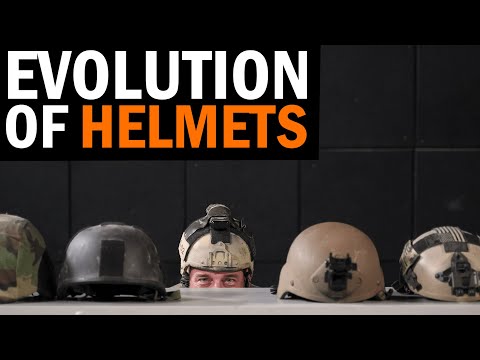
This entry details the evolution of tactical helmets as presented by former Navy SEAL Mark 'Coch' Cochiolo. It covers historical models like the M1 Steel Pot and progresses through Kevlar and MICH helmets, highlighting key features and operational contexts from WWII to modern conflicts in Iraq and Afghanistan. The information emphasizes the shift from fragmentation protection to advanced ballistic capabilities and integrated tactical accessories.
This video features Edwin Sarkissian, demonstrating high-level expertise in crossbow ballistics with the TenPoint Viper S400. The test covers penetration through various materials including cast iron skillets, Kevlar helmets, lumber, and body armor, showcasing the crossbow's significant kinetic energy and the effectiveness of its ACUslide system.
You've reached the end! 7 videos loaded.
Gun Laws by State
Read firearms regulations for all 50 states + D.C.
Find Gun Dealers
Search licensed FFL dealers near you.