This guide, based on expert analysis by Ian McCollum of Forgotten Weapons, details how to identify dangerous amateur headspace adjustments on an AK-type rifle. It focuses on inspecting the bolt's locking lugs and barrel for signs of grinding and improper machining. The video strongly emphasizes the extreme danger of such modifications and advises consulting a professional gunsmith if identified.
This video provides an expert-level overview of the Johnson M1941 Rifle's unique operating mechanism. It details the short recoil system where the barrel reciprocates, the rotary magazine's function, and the bolt head's locking lug system, drawing parallels to the AR-15. The instruction is delivered with deep technical insight, suitable for advanced firearm enthusiasts.
This guide details an experiment simulating a bolt-action rifle firing with its bolt open or locking lugs disengaged. Expert Scott DeShields demonstrates the potential for the bolt to become a dangerous projectile. The tests cover .223 Remington, .308 Winchester, and .50 BMG calibers, highlighting the severe risks associated with such malfunctions and emphasizing stringent safety measures.
Massad Ayoob, a recognized expert witness and author, explains the detrimental effects of dropping the slide on an empty chamber, particularly for finely tuned 1911 pistols. This practice can damage sensitive sear engagement and stress extractors and locking lugs. The professional standard is to 'slam it loaded, ease it empty' to preserve firearm longevity and function.
This video provides a foundational understanding of AR-15 Bolt Carrier Groups (BCGs), detailing their function and components. It clearly distinguishes between M16 (full-auto) and semi-automatic BCGs, explaining that M16 BCGs do not convert a semi-automatic rifle into a machine gun, citing ATF regulations. The explanation covers key parts like the carrier, gas key, bolt, extractor, locking lugs, firing pin, and gas rings, offering insights into their roles in rifle operation.
This video provides an unboxing and review of the Teslong NTG100 digital borescope, demonstrating its use for inspecting firearm barrels, rifling, gas ports, and locking lugs. The instructor highlights its 48-inch semi-rigid probe, adjustable LEDs, and compatibility with PCs and smartphones via USB or USB-C. Key features discussed include the importance of probe diameter (0.2 inches for 223/5.56) and adjustable mirror attachments for achieving proper depth of field. The review also includes a giveaway for a second unit.
This guide provides a comprehensive checklist for inspecting AK-style rifles before purchase, drawing on the expertise of Rob Ski from AK Operators Union. It covers critical areas such as magazine fitment, sight alignment, rivet quality, action smoothness, and internal component checks. Following these steps can help ensure you acquire a reliable and well-manufactured firearm, avoiding common pitfalls highlighted by the instructor.
This guide, presented by School of the American Rifle, details common AR-15 bolt failures, including cracks at the cam pin hole and broken locking lugs. It emphasizes thorough inspection during cleaning to identify potential issues like warping that can cause firing pin binding, leading to 'click no bang' malfunctions. Proper maintenance can prevent catastrophic failures in the field.
This video from Brandon Herrera explores the challenges and successes of 3D printed AK-47 receivers. It details a catastrophic failure of a fully 3D printed receiver due to plastic locking lugs and contrasts it with the functional DNO Firearms DX7, which utilizes a metal front trunnion to contain critical stresses. The expert analysis highlights the importance of material science and design in 3D printed firearm components.
This guide details how to check AK headspacing using go, no-go, and field gauges, as demonstrated by experts Rob Ski and Chase Sisgold. It emphasizes proper technique, the importance of not using excessive force, and identifying signs of wear that indicate a need for gunsmith attention. Proper headspacing is crucial for safe and reliable firearm function.
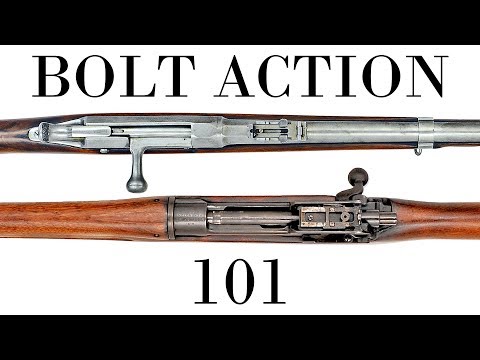
This video provides a foundational '101' understanding of bolt-action rifles by breaking down the critical components that influence their performance. It delves into the evolution and characteristics of ammunition, including powders, bullets, and casings, and explores the technical aspects of barrels, such as rifling and length. The discussion also covers the mechanics of bolt action mechanisms and their locking systems, highlighting the design choices that differentiate various models and impact overall functionality and reliability.
This guide details a method for testing AK-pattern rifle bolt and trunnion lug wear using DyKem layout fluid. By applying DyKem to critical locking surfaces and cycling the action, users can visualize wear patterns. This technique helps identify potential issues like uneven force distribution between primary and secondary locking lugs, which can indicate manufacturing or assembly problems. The process involves careful application, dry cycling, live-fire testing, and analysis of the resulting wear marks to assess the firearm's mechanical health.
Gun Laws by State
Read firearms regulations for all 50 states + D.C.
Find Gun Dealers
Search licensed FFL dealers near you.