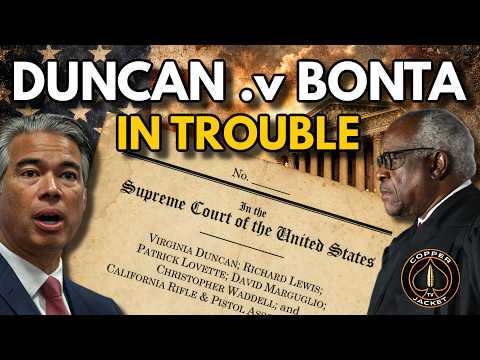
BREAKING!!! Supreme Court 8-1 Gun Possession Decision Changes Second Amendment Landscape Forever!

Published on July 8, 2024
Duration: 10:05

The Supreme Court has granted, vacated, and remanded the Range v. Garland case concerning firearm possession by individuals with nonviolent felony convictions. This action was taken in light of the recent US v. Rahimi decision. The Range case specifically addresses how the Bruen decision's historical analysis applies to individuals like Brian Range, who was convicted of a nonviolent misdemeanor related to food stamp fraud and subsequently barred from firearm possession.

Quick Summary

The Supreme Court granted, vacated, and remanded the Range v. Garland case, a significant ruling on firearm possession for individuals with nonviolent felony convictions. This action, taken in light of the US v. Rahimi decision, will influence how the Bruen ruling's historical analysis is applied to federal firearm prohibitions for non-violent offenders.

Chapters

  1. 00:00Supreme Court Decision on Gun Possession
  2. 00:15Channel Newsletter Announcement
  3. 01:08Introducing Range v. Garland Case
  4. 02:00Background of Brian Range
  5. 03:03District Court Ruling
  6. 03:24Third Circuit Appeal
  7. 04:00Third Circuit En Banc Decision
  8. 04:50Core Debate: Who are 'The People'?
  9. 05:38Government Appeals to Supreme Court
  10. 05:51US v. Rahimi Decision
  11. 06:57Range Case on Hold Behind Rahimi
  12. 07:35Supreme Court Order in Range Case
  13. 07:41Grant, Vacate, Remand Explained
  14. 08:03Frustration with GVR Outcome
  15. 08:48Anticipated Reaffirmation of Range Decision
  16. 09:05Likely Government Appeal Again
  17. 09:13Why the Supreme Court GVR'd
  18. 09:27Current Status and Future Outlook
  19. 09:38Support the Channel

Frequently Asked Questions

What is the significance of the Supreme Court's Range v. Garland decision?

The Supreme Court granted, vacated, and remanded the Range v. Garland case, which addresses firearm possession by individuals with nonviolent felony convictions. This action, taken in light of the US v. Rahimi decision, impacts how the Bruen ruling's historical analysis is applied to federal firearm prohibitions for non-violent offenders.

How does the US v. Rahimi decision relate to Range v. Garland?

The Supreme Court's decision to grant, vacate, and remand Range v. Garland was made specifically in light of the recent US v. Rahimi ruling. Rahimi affirmed federal firearm prohibitions for those under domestic violence restraining orders, and its reasoning may influence how the Court views the 'people' protected by the Second Amendment in cases like Range.

What was Brian Range's conviction, and why is it relevant to gun possession laws?

Brian Range was convicted of a misdemeanor for making a false statement on a federal form to obtain food stamps. This conviction led to a federal firearm prohibition under 922(g)(1), making his case a test for whether such nonviolent offenses should permanently bar individuals from Second Amendment rights.

What was the Third Circuit's ruling in Range v. Garland before the Supreme Court's intervention?

The Third Circuit's en banc panel ruled that 922(g)(1) was unconstitutional as applied to Brian Range. They determined that individuals like Mr. Range, despite his nonviolent misdemeanor, are still part of 'the people' protected by the Second Amendment, rejecting the government's argument that only 'law-abiding responsible citizens' are covered.

Related News

All News →

More 2nd Amendment & Law Videos You Might Like

More from Armed Scholar

View all →