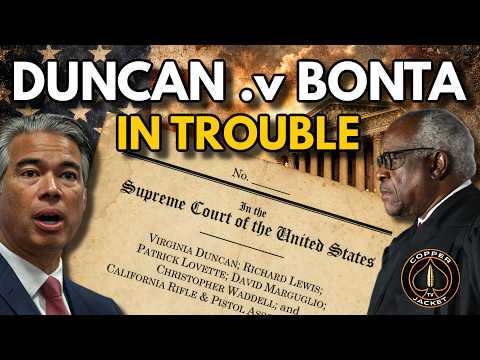
BREAKING: Supreme Court Decision Could Wipe Out Firearm Permits Overnight

Published on August 19, 2025
Duration: 10:50

This video provides an expert-level legal analysis of how recent Supreme Court decisions, particularly *Ramos v. Louisiana* and its reaffirmation in *Edwards v. Vannoy*, could impact firearm permitting laws nationwide. The speaker, demonstrating deep legal expertise, explains the incorporation of the Sixth Amendment's unanimous jury requirement to states via the Fourteenth Amendment's Due Process Clause. This precedent is then directly linked to the *Bruen* decision's incorporation of the Second Amendment through the same mechanism. The core argument posits that 'may issue' or 'good cause' permitting schemes, which rely on subjective government discretion, are now vulnerable to legal challenges. Such schemes are argued to violate the Due Process Clause by denying a fundamental right without objective criteria, potentially leading to the dismantling of these discretionary systems in states like California, New York, and New Jersey.

Quick Summary

Recent Supreme Court decisions, particularly Ramos v. Louisiana and its reaffirmation in Edwards v. Vannoy, establish that the Fourteenth Amendment's Due Process Clause applies fundamental rights to states. This precedent, mirroring the incorporation of the Second Amendment in Bruen, creates a powerful legal argument against discretionary 'may issue' firearm permitting systems, which may be challenged as violations of due process.

Chapters

  1. 00:00Introduction: SCOTUS Decision Impact
  2. 00:30Ramos v. Louisiana Precedent
  3. 01:15Edwards v. Vannoy Reaffirms Ramos
  4. 02:30Bruen and Due Process Connection
  5. 03:45Implications for 'May Issue' Permits
  6. 05:00Heller Decision and Fundamental Rights
  7. 06:15Permits as Unconstitutional Prior Restraint
  8. 07:30New Legal Challenge Strategy
  9. 08:45Impact on Specific States
  10. 09:30Conclusion: Major Legal Shift

Frequently Asked Questions

How could the Supreme Court's Ramos v. Louisiana decision impact firearm permits?

The Ramos decision established that the Sixth Amendment's unanimous jury requirement applies to states via the Fourteenth Amendment's Due Process Clause. This precedent, when linked with the Bruen decision's incorporation of the Second Amendment through the same Due Process Clause, creates a strong legal argument against discretionary 'may issue' firearm permitting systems.

What is the connection between the Bruen decision and firearm permits?

The Bruen decision incorporated the Second Amendment to the states using the Fourteenth Amendment's Due Process Clause. This identical legal pathway to incorporation, as used in Ramos for the Sixth Amendment, is crucial for challenging firearm permitting schemes that rely on subjective discretion, arguing they violate due process.

Why are 'may issue' firearm permit systems vulnerable after recent SCOTUS rulings?

'May issue' systems require individuals to demonstrate 'good cause' or meet subjective criteria for a permit. Since the Second Amendment is now incorporated to states via the Due Process Clause, and Ramos affirmed that due process requires objective standards (like unanimous juries), these discretionary systems are argued to violate due process by denying a fundamental right without objective justification.

Which states might be most affected by legal challenges to firearm permits?

States that still retain 'may issue' components or 'good cause' requirements in their firearm permitting systems are most likely to face legal challenges. This includes states such as California, New York, New Jersey, Maryland, Massachusetts, Delaware, and Rhode Island, where discretionary schemes are more prevalent.

Related News

All News →

More 2nd Amendment & Law Videos You Might Like

More from Guns You Can't Live Without

View all →