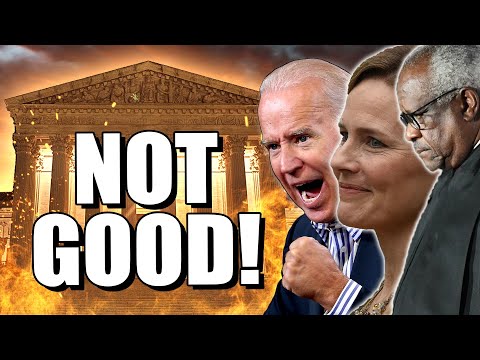
BREAKING! Supreme Court Immediate Emergency Review In Major Constitutional Rights Challenge!

Published on June 22, 2026
Duration: 9:50

This video details an emergency Supreme Court review concerning Texas Senate Bill 2420, the App Store Accountability Act. The law mandates universal age verification for app downloads, requiring explicit parental consent for each download, update, or in-app purchase, and restricts data tracking for minors. Critics argue it necessitates invasive data collection from adults, while proponents cite the state's power to protect minors in the digital landscape. The Supreme Court's emergency review will determine if the law can be enforced while further appeals proceed.


Quick Summary

The Supreme Court is reviewing Texas Senate Bill 2420, the App Store Accountability Act, on an emergency basis. This law mandates universal age verification and parental consent for all app downloads, updates, and purchases for minors, and restricts data tracking. Critics argue it infringes on digital privacy and free expression, while Texas asserts it's a necessary measure to protect children in the digital landscape.

Chapters

  1. 00:00Emergency Supreme Court Filing
  2. 00:33Texas SB 2420 Explained
  3. 01:31App Store Accountability Act Details
  4. 03:06Criticisms of the Law
  5. 03:28Texas's Legal Argument
  6. 04:26Applicants' Constitutional Argument
  7. 05:20Procedural History: District Court vs. Fifth Circuit
  8. 06:54Supreme Court Emergency Application
  9. 07:57What Happens Next
  10. 09:42National Implications

Frequently Asked Questions

What is Texas Senate Bill 2420?

Texas Senate Bill 2420, also known as the App Store Accountability Act, requires digital marketplaces to implement universal age verification for app downloads. It mandates explicit parental consent for each download, update, or in-app purchase for minors and restricts data tracking for users under 18.

Why is the App Store Accountability Act before the Supreme Court?

An emergency application was filed with the Supreme Court after the Fifth Circuit Court of Appeals stayed a lower court's injunction, allowing Texas to enforce SB 2420. The applicants seek to block the law's enforcement while the case proceeds through appeals.

What are the main arguments for and against Texas SB 2420?

Texas argues the law regulates commercial conduct to protect minors. Opponents claim it's an unconstitutional prior restraint on speech, likening apps to books, and that it requires invasive data collection from all users, not just minors.

What is the 'shadow docket' in relation to this case?

The 'shadow docket' refers to the Supreme Court's process for handling emergency requests outside its normal merit review. In this case, the court is being asked to step in on an emergency basis to address the Fifth Circuit's decision to allow SB 2420 to take effect.

Related News

All News →

More 2nd Amendment & Law Videos You Might Like

More from Armed Scholar

View all →