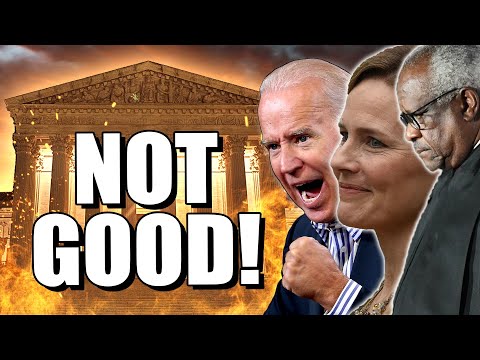
BREAKING TODAY! Supreme Court Issues 9-0 Unanimous Ruling With Nationwide & 2A Implications!

Published on June 19, 2026
Duration: 10:47

The Supreme Court issued a unanimous 9-0 ruling in US v. Hamani, striking down a federal law that bans habitual drug users from owning firearms. The court found that the law, as applied to an individual who occasionally uses cannabis for sleep, violates the Second Amendment. The ruling emphasizes that the government must provide specific evidence of an individual posing a danger, rather than relying on blanket prohibitions based on drug use.

Quick Summary

The Supreme Court unanimously ruled 9-0 in US v. Hamani that a federal law banning habitual drug users from owning firearms violates the Second Amendment as applied to individuals who occasionally use cannabis for sleep. The ruling emphasizes the need for individualized proof of danger, rejecting blanket prohibitions.

Chapters

  1. 00:00Introduction: Landmark 9-0 Ruling
  2. 00:55Case Overview: US v. Hamani
  3. 01:16Facts of the Case: Ali Hamani
  4. 02:17Government's Argument: Habitual Drunkards
  5. 03:31Court's Rejection of Analogy
  6. 04:48Concurring Opinions: Alito, Kagan, Thomas, Jackson
  7. 08:02Limitations of the Ruling
  8. 09:17Nationwide Implications & Future Challenges

Frequently Asked Questions

What was the Supreme Court's ruling in US v. Hamani regarding firearm possession and drug use?

The Supreme Court issued a unanimous 9-0 ruling in US v. Hamani, striking down a federal law that bans habitual drug users from owning firearms. The court found that the law, as applied to an individual who occasionally uses cannabis for sleep, violates the Second Amendment.

Did the Supreme Court's ruling in US v. Hamani ban all federal gun laws related to drug use?

No, the ruling is specific. It does not strike down bans on convicted felons or individuals actively intoxicated. It also doesn't prevent prosecutions if there's individualized proof that a person's drug use makes them dangerous.

How did the Supreme Court address the government's argument comparing cannabis users to historical 'habitual drunkards'?

The Court dismantled this argument, noting that historical 'habitual drunkards' were incapacitated individuals, not occasional users. Justice Gorsuch pointed out that many Founding Fathers regularly consumed alcohol, suggesting the analogy failed.

What are the broader implications of the US v. Hamani Supreme Court decision for gun rights?

The decision reinforces that the government cannot automatically strip Second Amendment rights based on occasional drug use without demonstrating individual danger. It opens the door for 'as applied' challenges to federal gun bans and the 4473 form.

Related News

All News →

More 2nd Amendment & Law Videos You Might Like

More from Armed Scholar

View all →