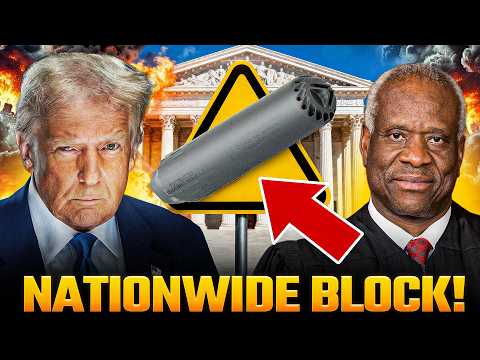
INSANE 2A NEWS: FEDERAL APPEALS COURT USES LAW THAT DOESN'T EXIST (!!!) TO TAKE AWAY 2A RIGHTS...

Published on December 11, 2023
Duration: 18:37

This analysis, presented by an authoritative legal expert, details how the Second Circuit Court of Appeals allegedly used a non-existent law, specifically a misconstrued version of the 1328 Statute of Northampton, to justify restricting Second Amendment rights in 'sensitive places'. The ruling's reliance on flawed historical analogs and fabricated statutes is critically examined, highlighting potential legal implications for government-mandated gun-free zones.

Quick Summary

The Second Circuit Court of Appeals allegedly used a non-existent law, a misconstrued 1328 Statute of Northampton, to restrict Second Amendment rights in 'sensitive places'. This ruling's reliance on flawed historical analogs, including a 'bogus' 1792 North Carolina statute, weakens its legal standing and implications for gun-free zones.

Chapters

  1. 00:00Court Error in 2A Case
  2. 01:05Antonyuk v. Chiumento Decision
  3. 02:43Flawed Historical Analogs
  4. 05:00The Bogus NC Statute
  5. 07:35Expert Debunking of Statute
  6. 08:45Legal Implications and Conclusion

Frequently Asked Questions

What law did the Second Circuit Court of Appeals allegedly use incorrectly in a recent Second Amendment case?

The Second Circuit Court of Appeals reportedly used a non-existent law, specifically a misconstrued version of the 1328 Statute of Northampton, to justify restricting Second Amendment rights in 'sensitive places' within the Antonyuk v. Chiumento decision.

What historical precedent did the court cite for banning firearms in modern public forums?

The court cited the 1328 Statute of Northampton from England, claiming its tradition of banning firearms in 'fairs and markets' translated to modern public forums like parks and zoos. This analog was previously rejected by the Supreme Court in Bruen.

Is the 1792 North Carolina statute cited in the ruling legitimate?

No, historian Stephen Halbrook confirms the cited 1792 North Carolina statute is 'bogus.' It was allegedly inserted by compilers who found the original source 'utterly untrustworthy' and never actually in force.

What are the legal implications of the court relying on a non-existent law?

Relying on non-existent or misrepresented historical statutes significantly weakens the legal foundation of the court's ruling. It undermines the legitimacy of restrictions on Second Amendment rights in 'sensitive places' and may be grounds for further legal challenge.

Related News

All News →

More 2nd Amendment & Law Videos You Might Like

More from The Four Boxes Diner

View all →