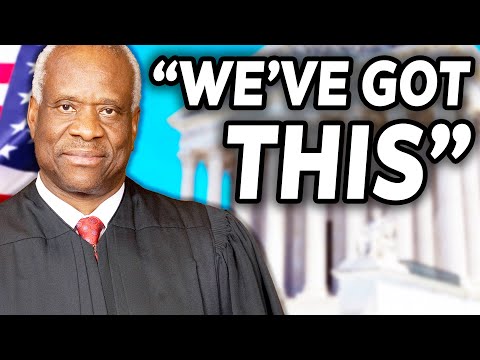
Is It Time to End Birthright Citizenship?

Published on March 29, 2026
Duration: 9:06

This video discusses the upcoming Supreme Court case Trump v. Hawaii, which challenges the interpretation of the 14th Amendment's Citizenship Clause regarding birthright citizenship for children of parents who entered the U.S. illegally. It contrasts the historical context of the amendment, aimed at overturning Dred Scott, with current debates about 'subject to the jurisdiction thereof.' The speaker emphasizes the importance of constitutional structures over majority rule and questions the president's authority to amend constitutional application via executive order.


Quick Summary

The Supreme Court case Trump v. Hawaii challenges the 14th Amendment's Citizenship Clause regarding birthright citizenship for children of parents who entered the U.S. illegally. The debate centers on the phrase 'subject to the jurisdiction thereof,' contrasting with historical precedents like Dred Scott and United States v. Wong Kim Ark, which affirmed birthright citizenship.

Chapters

  1. 00:00Introduction: Washington Gun Law TV
  2. 00:12Supreme Court Case: Trump v. Hawaii
  3. 00:30Birthright Citizenship & 14th Amendment
  4. 01:43Text of the 14th Amendment
  5. 02:43Historical Context: Dred Scott
  6. 04:13Precedent: US v. Wong Kim Ark
  7. 06:27Constitutional Republic vs. Democracy
  8. 07:05Presidential Authority & Executive Orders
  9. 08:04Case Details & Oral Arguments

Frequently Asked Questions

What is the core issue in the Supreme Court case Trump v. Hawaii?

The core issue in Trump v. Hawaii is whether a president can end birthright citizenship for children born in the U.S. to parents who entered the country illegally, by challenging the interpretation of the 14th Amendment's Citizenship Clause, specifically the phrase 'subject to the jurisdiction thereof.'

What is the historical significance of the 14th Amendment regarding citizenship?

The 14th Amendment was ratified to grant citizenship to formerly enslaved persons, overturning the Supreme Court's Dred Scott v. Sandford decision, which denied citizenship to individuals whose parents were not citizens. It aimed to ensure citizenship by birth within the U.S. regardless of race or parentage.

What legal precedent exists regarding birthright citizenship for children of non-citizens?

The Supreme Court case United States v. Wong Kim Ark (1898) established a key precedent, ruling that a person born in the United States to Chinese parents who were not U.S. citizens was indeed an American citizen by birthright, affirming the principle of jus soli.

How does the speaker define a constitutional republic?

A constitutional republic is defined as a representative government that is limited by a supreme constitution. This constitution protects individual rights and prevents the tyranny of the majority, distinguishing it from a pure democracy where majority rule is absolute.

Related News

All News →

More 2nd Amendment & Law Videos You Might Like

More from Washington Gun Law

View all →