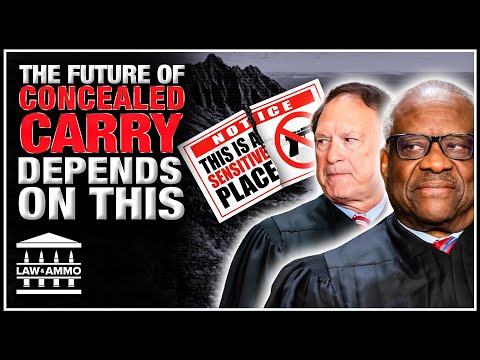
Supreme Court's 6-3 Decision Just Changed Concealed Carry Forever - Gun Owners Stunned!

Published on November 28, 2025
Duration: 11:54

This video provides an expert analysis of the Supreme Court's 6-3 decision in NYSRPA v. Bruen, which fundamentally altered concealed carry laws across the United States. The ruling shifted the legal standard for firearm restrictions from balancing tests to a 'text and history' approach, requiring any restriction to be historically rooted. The video details the end of the 'proper cause' requirement in states like New York and California, the subsequent legislative responses creating 'sensitive places,' and ongoing legal challenges to these new laws. It also touches on data debates regarding shall-issue laws and their impact on crime rates.

Quick Summary

The Supreme Court's 6-3 Bruen decision revolutionized concealed carry by establishing self-defense as a constitutional right for carrying firearms in public, ending the 'proper cause' requirement. New regulations must now meet a 'text and history' standard, rooted in historical firearm tradition, impacting state laws and leading to ongoing legal challenges.

Chapters

  1. 00:00Bruen Decision Overview
  2. 00:49The Old System: Proper Cause
  3. 02:03NYSRPA v. Bruen Ruling
  4. 03:45The New Legal Standard
  5. 05:11State Resistance and New Laws
  6. 06:51The Data Debate
  7. 08:43Impact on Permits and Litigation
  8. 10:17Future Legal Challenges

Frequently Asked Questions

What did the Supreme Court's 6-3 Bruen decision change about concealed carry?

The Supreme Court's 6-3 Bruen decision fundamentally altered concealed carry by establishing self-defense as a valid reason to carry firearms in public. It ended the decades-old 'proper cause' standard used by many states, which required applicants to prove a specific threat to obtain a permit.

What is the new legal standard for firearm restrictions after the Bruen decision?

Following the Bruen decision, the Supreme Court replaced balancing tests with a 'text and history' standard. This means any firearm restriction must now be rooted in the nation's historical tradition of firearm regulation, dating back to 1791 or 1868, to be considered constitutional.

How have states responded to the Bruen decision regarding concealed carry?

Many states, including New York and California, responded by enacting new laws that designate 'sensitive places' where carrying firearms is banned, such as parks, public transit, and churches. These new laws are currently facing legal challenges in federal courts.

Does data support the idea that 'shall issue' concealed carry laws increase crime?

Studies from organizations like the Rand Corporation and Stanford University show varying results. However, data from states like Florida indicates very low permit revocation rates (under 0.1%), suggesting that law-abiding concealed carriers are not significantly contributing to crime increases.

Related News

All News →

More 2nd Amendment & Law Videos You Might Like

More from Line45

View all →