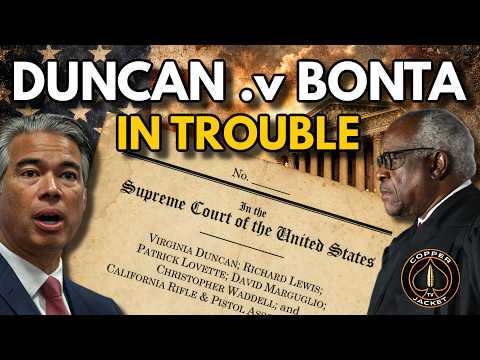
The New Assault Weapon Ban Case That Has the Most of Arguments

Published on July 7, 2024
Duration: 8:51

This video discusses the legal challenge to the District of Columbia's assault weapon ban in the case of Clor v. District of Columbia. It highlights how the court's previous ruling in Heller 2, which found the ban constitutional using a two-part balancing test, is now problematic following the Supreme Court's Bruen decision. The argument centers on the 'common use' test and the Second Amendment's application to modern firearms.

Quick Summary

The case of Clor v. District of Columbia challenges the District of Columbia's assault weapon ban. A key argument is that modern semi-automatic rifles, like AR-15s, are in common use for lawful purposes and therefore protected by the Second Amendment, especially after the Supreme Court's Bruen decision invalidated older legal tests used to uphold such bans.

Chapters

  1. 00:00Introduction and Location
  2. 01:08Sponsor: Right to Bear
  3. 02:00Clor v. District of Columbia Case Overview
  4. 02:46History of DC's Assault Weapon Ban
  5. 03:08Heller 2 and the Balancing Test
  6. 03:32Impact of Bruen Decision
  7. 04:39District's Previous Ruling on Second Amendment
  8. 05:07Plaintiffs' Arguments: Common Use Test
  9. 06:01Second Amendment and Modern Firearms
  10. 06:34AR-15s in Common Use
  11. 06:51Heller Decision on Individual Rights
  12. 07:12Requested Relief
  13. 07:30Case Analysis and Outlook
  14. 07:46Case Name and Sponsors
  15. 07:54Resources and Call to Action

Frequently Asked Questions

What is the main legal challenge in Clor v. District of Columbia?

The primary legal challenge in Clor v. District of Columbia is against the District of Columbia's existing assault weapon ban. The case argues that this ban infringes upon Second Amendment rights, particularly in light of recent Supreme Court decisions like Bruen.

How has the Bruen decision impacted the Clor v. District of Columbia case?

The Bruen decision has significantly impacted the case by overturning the two-part balancing test previously used to uphold gun control laws. This forces courts to re-evaluate bans like DC's, which were previously found constitutional under the old framework.

What is the 'common use' test in Second Amendment law?

The 'common use' test, as discussed in the context of Clor v. District of Columbia, refers to firearms that are in common use by law-abiding citizens for lawful purposes. The argument is that such firearms are protected by the Second Amendment, regardless of their modernity.

Why is the District of Columbia's previous ruling in Heller 2 relevant to this new case?

The District of Columbia's previous ruling in Heller 2 found their assault weapon ban constitutional using a now-outdated balancing test. This prior ruling is relevant because the court previously acknowledged the Second Amendment's implication in the ban, creating a potential conflict with current legal standards established by Bruen.

Related News

All News →

More 2nd Amendment & Law Videos You Might Like

More from Washington Gun Law

View all →