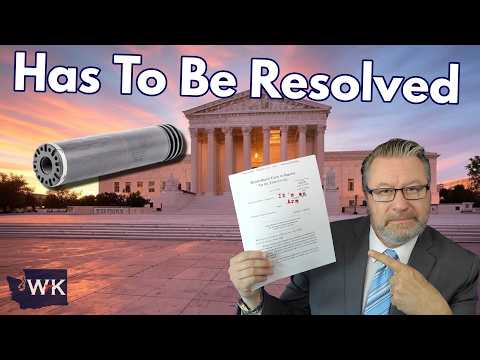
Unanimous Suppressor & NFA Decision Drops Immediately After Bad Precedent Trap!

Published on June 21, 2026
Duration: 9:27

This video analyzes a significant Fifth Circuit Court of Appeals ruling that suppressors are protected arms under the Second Amendment. Despite this win, the defendant in US v. Camo was convicted due to a prior precedent (US v. Peterson) which deemed the NFA's registration system presumptively lawful. Two judges on the Camo panel issued a strong concurrence calling for an en banc review to overturn Peterson, highlighting a critical circuit split and potentially setting the stage for a Supreme Court case.

Quick Summary

The Fifth Circuit Court of Appeals has ruled that suppressors are protected arms under the Second Amendment, a significant development in firearm law. However, a prior precedent from US v. Peterson prevented the defendant in US v. Camo from winning their case, highlighting the complexities of legal challenges to the NFA.

Chapters

  1. 00:00Major NFA Developments
  2. 00:15Fifth Circuit Ruling on Suppressors
  3. 00:35The Peterson Precedent Trap
  4. 00:57US v. Camo Case Breakdown
  5. 01:07US v. Peterson Analysis
  6. 01:44The Camo Decision Unpacked
  7. 02:02Suppressors as Protected Arms
  8. 02:28Bruin Framework Application
  9. 02:46Circuit Split Created
  10. 02:53The Rule of Orderliness Explained
  11. 03:12Judges' Concurrence for En Banc Review
  12. 03:38Critique of Peterson Precedent
  13. 03:53Implications of En Banc Review
  14. 04:09Future of NFA Challenges
  15. 04:36Impact on US v. Peterson
  16. 04:47Potential Supreme Court Case
  17. 05:08Will the Fifth Circuit Override Peterson?
  18. 05:35Conclusion and Call to Action

Frequently Asked Questions

What did the Fifth Circuit rule regarding suppressors and the Second Amendment?

The Fifth Circuit Court of Appeals ruled that suppressors are protected arms under the plain text of the Second Amendment, recognizing their role in reducing noise, preventing hearing loss, and increasing firearm accuracy for self-defense.

Why was the defendant in US v. Camo still convicted despite the ruling?

Despite the ruling that suppressors are protected arms, the defendant was convicted due to the 'rule of orderliness,' which binds appellate panels to prior decisions within the same circuit. The prior ruling in US v. Peterson established the NFA's registration system as presumptively lawful, trapping the Camo panel.

What is the significance of the concurrence in the US v. Camo decision?

Two judges on the US v. Camo panel issued a strong concurrence calling for an en banc review to overturn the precedent set in US v. Peterson. This signals a willingness within the Fifth Circuit to re-examine and potentially dismantle the existing NFA framework.

How does the US v. Camo ruling create a circuit split?

The Fifth Circuit's decision that suppressors are protected arms creates a direct conflict with the Ninth Circuit, which previously ruled they are not. This circuit split is a key factor that could lead to the Supreme Court taking up the issue.

Related News

All News →

More 2nd Amendment & Law Videos You Might Like

More from Armed Scholar

View all →