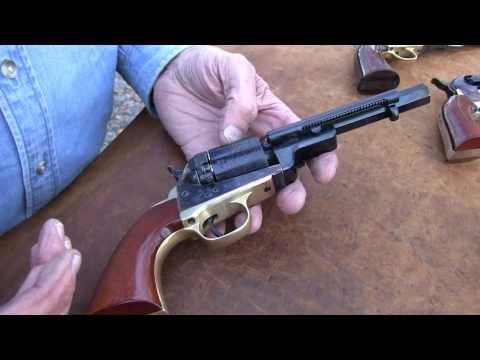
1858 Remington Cartridge Conversion

Published on May 4, 2014
Duration: 21:42

This guide details the process of converting a 1858 Remington New Model Army percussion revolver to fire .45 Colt cartridges using a modern conversion cylinder. It emphasizes safety precautions, including using only low-pressure ammunition and ensuring the revolver has a steel frame. The conversion allows for easier loading and potentially more reliable ignition compared to traditional percussion systems.

Quick Summary

Convert your 1858 Remington percussion revolver to fire .45 Colt cartridges by installing a specialized bored-through conversion cylinder. Ensure you use only low-pressure 'Cowboy Loads' and that your revolver has a steel frame for safety. This modification enhances reliability and ease of use over traditional percussion systems.
Chapters

  1. 00:00Introduction & 1858 Remington Percussion
  2. 01:31Remington vs. Colt History
  3. 03:11The Cartridge Conversion Concept
  4. 05:28Modern Conversion Cylinders Explained
  5. 07:54Loading and Safety Precautions
  6. 10:01Range Performance of Converted Revolver
  7. 16:23Caliber Technicalities Explained

Frequently Asked Questions

How do you convert a 1858 Remington percussion revolver to fire cartridges?

To convert a 1858 Remington, you replace the original percussion cylinder with a specialized bored-through cartridge conversion cylinder. This allows the revolver to safely fire metallic cartridges like .45 Colt, provided you use low-pressure 'Cowboy Loads' and the firearm has a steel frame.

What type of ammunition should be used in a converted 1858 Remington?

Only low-pressure 'Cowboy Loads' specifically designed for historical firearms should be used in a converted 1858 Remington. Modern, high-pressure ammunition can damage the firearm and is extremely dangerous due to its original black powder design limitations.

Why can a .44 caliber percussion revolver fire a .45 caliber cartridge?

This is due to historical caliber measurement differences in the 19th century. Caliber was often measured land-to-land on percussion revolvers, while groove-to-groove on cartridge revolvers. A .44 percussion bore was often large enough for a .45 cartridge.

Are cartridge conversions safe for 1858 Remington revolvers?

Cartridge conversions can be safe if performed correctly with the right components and ammunition. It is crucial to use a steel-framed revolver and exclusively low-pressure 'Cowboy Loads'. Brass-framed revolvers are not safe for conversion.

More Gunsmithing & DIY Videos You Might Like

More from hickok45

View all →