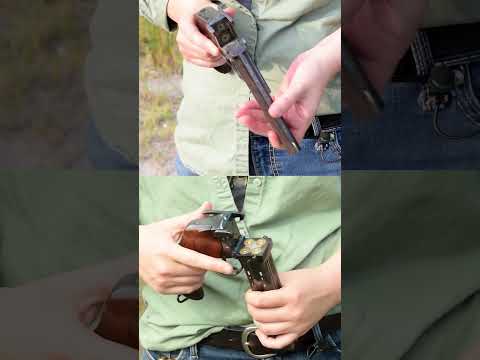
History of WWI Primer 043: U.S. Colt New Army Documentary

Published on January 17, 2017
Duration: 54:43

This guide details the mechanical overview of the Colt New Army/New Navy revolver, focusing on its internal components and action cycles. It highlights the dual flat springs, hand spring, Felton safety, and cylinder stops. The information is presented with a high degree of historical rigor, as expected from a primary resource for historical small arms data.

Quick Summary

The Colt New Army revolver, a primary service sidearm for the U.S. during the Spanish-American War, was re-issued in large numbers during WWI due to high demand. It features a 6-round swing-out cylinder in .38 Long Colt, weighs about 2 lbs, and has an 11.5-inch overall length. Safety improvements like the Felton mechanism were later incorporated.

Chapters

  1. 00:00Introduction to the Colt New Army
  2. 01:35Samuel Colt and Early Company History
  3. 04:38The Shift to Double Action
  4. 10:14William Mason and the Winchester Rivalry
  5. 12:15U.S. Navy Adoption
  6. 16:52Army Trials and the Model 1892
  7. 21:13Safety Improvements and Model Variations
  8. 31:11Mechanical Overview and Animation
  9. 36:28Range Performance and Ergonomics
  10. 40:49WWI Service and Legacy

Frequently Asked Questions

What were the key technical specifications of the Colt New Army revolver?

The Colt New Army revolver typically featured a 6-round swing-out cylinder chambered in .38 Long Colt, with an overall length of 11.5 inches and a weight of approximately 2 pounds (940g). Standard barrel length was often 6 inches.

Why was the Colt New Army revolver re-issued during World War I?

During WWI, the massive expansion of the U.S. Army created a significant demand for sidearms. Approximately 25,000 Colt New Army and New Navy revolvers were brought out of storage and re-issued to meet this need, particularly for rear-echelon troops and guards.

What safety improvements were made to the Colt New Army/New Navy series?

Early models had a flaw where the hammer could fall if the cylinder wasn't fully locked. The introduction of the Model 1894 incorporated Frank Felton's patented safety lever, which blocked the hammer unless the cylinder was securely closed, enhancing safety.

More Gunsmithing & DIY Videos You Might Like

More from C&Rsenal

View all →