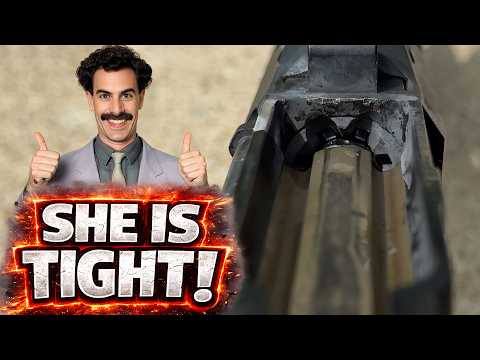
KAC Sandcutter BCG Physical

Published on March 3, 2020
Duration: 11:27

This video provides a detailed physical inspection of a Knight's Armament Sandcutter Bolt Carrier Group (BCG). It covers essential checks like bolt protrusion, extractor function, headspace, and gas ring integrity using various gauges. The instructor also performs a reverse torque test on the carrier key screws and identifies minor gas leakage, leading to a recommendation for carrier key replacement and proper staking.


Quick Summary

A thorough inspection of a Knight's Armament Sandcutter BCG involves checking bolt protrusion, extractor and bolt tail fit with gauges, firing pin hole dimensions, ejector function, gas ring integrity, and headspace. A reverse torque test on carrier key screws is also performed to assess their security.

Chapters

  1. 00:00Introduction: KAC Sandcutter BCG Physical Inspection
  2. 00:46Bolt Assembly and Initial Checks
  3. 01:33Bolt Fit and Firing Pin Inspection
  4. 01:43Extractor Inspection with Gauges
  5. 03:11Bolt Tail and Firing Pin Hole Gauging
  6. 03:48Ejector and Gas Ring Test
  7. 04:10Headspace Check with Gauges
  8. 05:07Bolt Assembly Review
  9. 05:20Carrier Inspection and Calibration
  10. 05:58Carrier Key Alignment and Gas Key Fit
  11. 06:46Carrier Three-Bore Check
  12. 06:59Reverse Torque Test on Carrier Key Screws
  13. 09:50Interpreting Torque Test Results
  14. 10:05Gas Leakage Analysis
  15. 11:05Conclusion and Next Steps

Frequently Asked Questions

What are the key components to inspect on a Knight's Armament Sandcutter BCG?

Key components include the bolt for proper fit and protrusion, the firing pin for damage, the extractor using go/no-go gauges, the bolt tail seal, the firing pin hole, ejector, and gas rings. The carrier and gas key fit are also crucial.

How is headspace checked on an AR-15 BCG?

Headspace is checked using go and no-go gauges. The bolt should close and rotate on the go gauge but should not close or rotate on the no-go gauge, ensuring proper chamber dimensions.

What does a reverse torque test on carrier key screws indicate?

A reverse torque test reveals how securely the carrier key screws are fastened. It helps determine if they are likely to loosen under stress, with higher torque values indicating better security.

What are signs of gas leakage in an AR-15 BCG?

Signs of gas leakage include carbon fouling or residue blowing out around the gas port or carrier key. This indicates a poor seal between the carrier key and the carrier, or the gas rings and the bore.

More Gunsmithing & DIY Videos You Might Like

More from School of the American Rifle

View all →