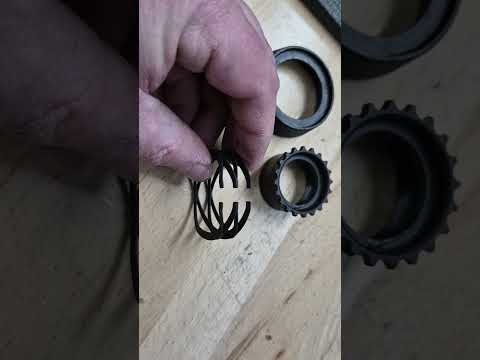
Part 1 - Overview of a 60 year old Armalite/Colt 601 AR15 Parts Kit.

Published on February 14, 2021
Duration: 38:02

This video provides a detailed overview and comparison of components from a 60-year-old Colt 601 AR-15 parts kit against later M16 variants. The instructor highlights significant differences in furniture, receivers, bolt carrier groups, and barrels, emphasizing the historical evolution of the AR-15 platform. Several reproduction parts are identified as necessary replacements due to wear or damage on the original components.

Quick Summary

The Colt 601 AR-15, a precursor to the M16, featured distinct components like brown fiberglass furniture, a non-chrome-lined 1:14 twist barrel, and a 'fat' firing pin. Unlike later models, its receiver extension lacked flats for an armorer's wrench, requiring a punch-based removal tool. Many original parts show significant wear, necessitating reproduction components for accurate builds.

Chapters

  1. 00:00Introduction to Colt 601 Parts Kit
  2. 00:49Reproduction Lower Receiver (Brownells 601 Retro)
  3. 01:24Kit Components Overview and Acquisition
  4. 02:58Colt 601 vs. M16: Early AR-15 History
  5. 03:26Colt 601 Furniture: Brown Fiberglass
  6. 04:19Distinctive Features: Brown/Reddish Brown Furniture
  7. 04:48Handguards and Heat Shields
  8. 05:07Pistol Grip Wear and Character
  9. 05:38Buttstock Condition and Material
  10. 05:52Early Buttstock: No Trap Door, Different Sling Swivel
  11. 07:00Waffle Type Magazine Issues
  12. 07:51Bolt Carrier Group and Upper Receiver
  13. 08:01Edgewater Buffers
  14. 09:03Component Comparisons: Receiver Extension
  15. 10:24Buttstock Comparison: 601 vs. M16A1
  16. 11:38Buffer Comparison: Edgewater vs. Later Models
  17. 12:49Pistol Grip Comparison: 601 vs. M16A1
  18. 13:43Lower Parts Kit: Bolt Catch Comparison
  19. 14:40Magazine Comparison: Waffle vs. Reproduction
  20. 16:09Magazine Pouch Variations
  21. 16:41Lower Receiver Differences
  22. 17:54Receiver Variations and Non-Machine Gun Build
  23. 18:06Upper Receiver and Charging Handle
  24. 18:38Upper Receiver Comparison: Forward Assist, Markings
  25. 19:18Dust Cover and Pivot Assembly Differences
  26. 20:24Barrel Profile and Twist Rate
  27. 20:47Front Sight Base Differences
  28. 21:35Slip Ring / Delta Ring Assembly
  29. 22:12Muzzle Device: Duckbill
  30. 23:43Handguards: Brown Fiberglass vs. M16A1
  31. 24:08Gas Tube Differences
  32. 25:11Bolt Carrier Group and Lower Parts
  33. 25:17Bolt Carrier Differences: Chrome, Staking, Gas Key
  34. 26:35Bolt Disassembly: Retaining Pin and Firing Pin
  35. 27:35Bolt Differences: Band and Extractor
  36. 30:04Cam Pin Designs
  37. 30:56Extractor Spring and Insert Variations
  38. 31:51Reproduction Parts Overview
  39. 32:02Reproduction Gas Tube and Corrosion Issues
  40. 33:13Front Sling Swivel Differences
  41. 34:00Replacement Extractor (Colt)
  42. 34:20Magazine Release Button Differences
  43. 34:41Dimpled Takedown Pins and Pivot Pins
  44. 35:53Reproduction Firing Pin Retaining Pin
  45. 36:13Modern AR-15 Components for Fire Control Group
  46. 36:56Part Two Preview: Restoration Process
  47. 37:03Condition of Original Parts: Corrosion and Wear

Frequently Asked Questions

What are the key differences between a Colt 601 AR-15 and later M16 models?

The Colt 601 AR-15 featured brown fiberglass furniture, a non-chrome-lined 1:14 twist barrel, a different bolt carrier group with a 'fat' firing pin, and lacked a forward assist on the upper receiver. Later M16 models incorporated design changes for improved reliability and standardization.

How did the receiver extension removal differ on early Colt 601 AR-15s?

Early Colt 601 receiver extensions did not have flats for an armorer's wrench. Instead, a specialized tool was used, inserting a punch through the buffer tube to unscrew it from the lower receiver.

What is notable about the furniture on a Colt 601 AR-15 parts kit?

The furniture, including the pistol grip, handguards, and buttstock, is typically made of brown fiberglass or 'bakelite'. These early pieces often show significant wear, with the original green or black paint worn through to reveal the underlying material.

Why are reproduction parts often necessary when building a Colt 601 AR-15 clone?

Many original Colt 601 parts are rare, damaged, or were designed differently than modern AR-15 components. Reproduction parts, such as lower receivers, gas tubes, and specific pins, are often needed to complete a functional and historically accurate build.

What are the main differences in the bolt carrier group between a Colt 601 and an M16A1?

The Colt 601 BCG is fully chromed, has a different staking method on the gas key, and uses a larger, heavier 'fat' firing pin. Later M16A1 BCGs have different staking, a standard firing pin, and often lack chrome plating on the carrier.

Related News

All News →

More Gunsmithing & DIY Videos You Might Like

More from School of the American Rifle

View all →