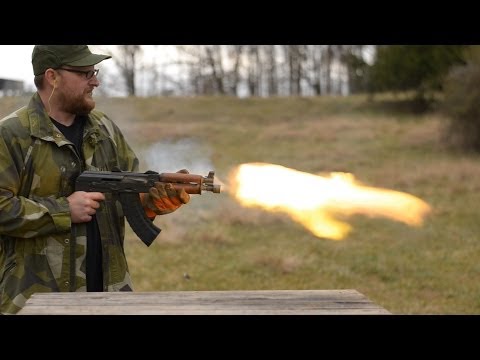
The Basics of Manganese Phosphating (Parkerizing) in HD

Published on August 15, 2010
Duration: 18:50

This video details the manganese phosphating (Parkerizing) process for firearm refinishing, starting with heavily rusted parts. It covers essential preparation steps like ultrasonic cleaning and sandblasting, followed by the immersion in a heated Lauer Custom Weaponry solution. The process concludes with neutralization and oil saturation for corrosion resistance, transforming pitted metal into a durable black finish.

Quick Summary

Manganese phosphating (Parkerizing) requires thorough metal preparation including ultrasonic cleaning and sandblasting. The parts are then immersed in a heated solution (195-210°F) for 6-20 minutes. Post-treatment involves water neutralization, drying, and oil saturation with products like Ballistol for corrosion resistance.

Chapters

  1. 00:00Introduction: Rust Assessment & Goal
  2. 01:04Ultrasonic Cleaning and Degreasing
  3. 04:17Stock Restoration Overview
  4. 05:58Parkerizing Tank Setup and Heating
  5. 09:38Custom Fixtures for Even Etching
  6. 11:51Sandblasting and Critical Metal Prep
  7. 14:32The Phosphating Immersion Process
  8. 17:27Final Finishing: Neutralizing and Oiling

Frequently Asked Questions

What are the key steps for preparing firearm parts for manganese phosphating?

Preparation involves thorough disassembly, ultrasonic cleaning with Simple Green and distilled water to remove oil and rust, followed by sandblasting using oil-free air. Critical steps include ensuring the blasting media is clean and the air supply is free of moisture and contaminants.

What temperature and time are needed for the manganese phosphating process?

The Parkerizing solution should be heated to 195-210°F. The immersion time typically ranges from 6 to 20 minutes, depending on the specific metal's metallurgy and the age of the solution, continuing until the part stops bubbling.

How is the firearm finish protected after the Parkerizing process?

After etching, parts are neutralized in a water bath, dried completely with compressed air, and then saturated with a protective oil like Ballistol. This oil soaks into the porous phosphate coating, providing long-term corrosion resistance.

What kind of equipment is needed for home firearm Parkerizing?

Essential equipment includes a large tank for the phosphating solution, a heat source (like propane burners), a thermometer, an ultrasonic cleaner, a sandblasting cabinet with an air compressor, and custom fixtures for holding parts. Safety gear is also crucial.

More Gunsmithing & DIY Videos You Might Like

More from Iraqveteran8888

View all →