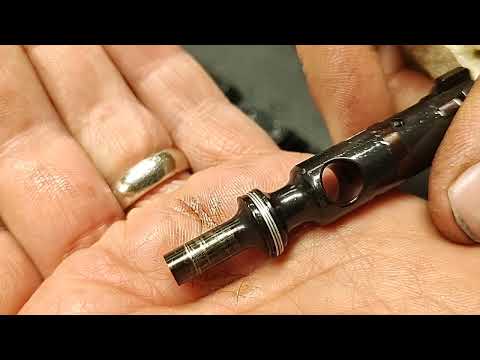
Young Manufacturing BCG Examinations (1 Physical/ 1 Autopsy)

Published on July 17, 2021
Duration: 47:19

This video provides an in-depth, expert-level examination and upgrade procedure for Young Manufacturing Bolt Carrier Groups (BCGs). Lead Firearms Instructor and SEO Strategist details a comprehensive inspection process covering headspace, extractor function, ejector pins, firing pin protrusion, and bolt face integrity. The guide includes step-by-step instructions for replacing worn components with upgraded parts like Michigan Made optimized carry key screws, Sprinco ejector springs, and spiral coil pins, along with modifications to ensure proper fit and function. It emphasizes critical checks and potential failure points, offering practical solutions for common issues encountered with BCGs.


Quick Summary

Expert inspection of Young Manufacturing Bolt Carrier Groups (BCGs) reveals critical areas like extractor spring quality, ejector pin integrity, and carrier key staking. Upgrades include Sprinco springs and spiral pins. Proper staking of carrier key screws is essential to prevent loosening, especially with imported YFS screws.

Chapters

  1. 00:00Introduction: Young Manufacturing BCGs
  2. 00:11BCG Overview and Upgrades
  3. 01:29Gas Ring Test
  4. 02:24Bolt Component Disassembly
  5. 02:34Headspace Check
  6. 03:22Extractor Removal and Inspection
  7. 04:00Extractor Insert and Spring Quality Check
  8. 05:03Extractor Spring Replacement
  9. 06:07Extractor Claw Inspection
  10. 06:21Installing New Extractor Springs
  11. 07:09Seating Extractor Springs Correctly
  12. 08:20Modifying Extractor Pocket with Dremel
  13. 10:07Extractor Gauge Check
  14. 10:29Magnetism Check
  15. 11:22Bolt Tail and Bolt Face Inspection
  16. 12:31Cam Pin Wear Gauge
  17. 13:00Ejector Spring Feel Test
  18. 13:20Ejector Inspection and Modification
  19. 13:53Ejector Roll Pin Removal
  20. 16:13Ejector Modification (Rounding Edge)
  21. 17:40Installing New Ejector Spring and Coil Pin
  22. 19:18Ejector Pin Seating Check
  23. 22:01Firing Pin Hole and Protrusion Check
  24. 23:32Firing Pin Hole Gauge Check
  25. 24:02Bolt Support Shoulder Check
  26. 25:14Cam Pin Inspection
  27. 26:02Three-Bore Check and Gas Path
  28. 28:47Internal Carrier Inspection (Borescope)
  29. 29:16Gas Path Check
  30. 29:45Carrier Length Measurement
  31. 30:54Visual Carrier Observation
  32. 31:39Carrier Key Screw Issues (YFS Screws & Staking)
  33. 33:03Three-Bore Check (Gas Key)
  34. 34:02Carrier Key Straightness Check
  35. 35:26Three-Bore Check (Bolt Support Shoulder & Gas Ring Run)
  36. 37:13Inner Inspection (Carrier Interior)
  37. 39:13Reverse Gas Key Check (Torque)
  38. 43:32Carrier Key Screw Swap and Staking
  39. 44:36Post-Staking Straightness Check
  40. 45:14Alignment Check with Upper Receiver
  41. 46:59Overall BCG Performance Summary
  42. 47:10Conclusion

Frequently Asked Questions

What are the key indicators of a worn or faulty AR-15 extractor spring?

A common sign of a weak extractor spring is the presence of both an O-ring (doughnut) and an insert on the extractor. This setup often signifies a short, weak spring that lacks proper tension, which can lead to extraction issues.

How can you properly install an AR-15 extractor spring and insert?

When installing a new extractor spring and insert, it's crucial to seat them correctly within the extractor's pocket. The spring should follow the contour of the winding, and the insert should click into place. A slight crush with pliers can help capture it, preventing it from falling out during disassembly.

What is the significance of the gas ring run's smoothness in a bolt carrier?

The gas ring run, which is the secondary run inside the bolt carrier where the gas rings ride, must be smooth. Roughness in this area will cause accelerated wear on the gas rings, potentially leading to gas leaks and reduced performance over time.

Why is staking carrier key screws important on an AR-15?

Staking carrier key screws is vital to prevent them from loosening due to vibration and heat. Young Manufacturing uses YFS screws and relies on thread locker, but staking provides a more secure mechanical lock, especially important for competition or high-round-count use.

More Gunsmithing & DIY Videos You Might Like

More from School of the American Rifle

View all →