Clips: Why do we always pick on the Reichsrevolver?

Published on September 17, 2021
Duration: 9:22

The Reichsrevolver, despite its historical significance in the German military, is critically examined for its outdated design compared to contemporaries. Its single-action-only mechanism, heavy hammer spring, awkward grip (especially on the 1879 model), cumbersome loading, and difficult ejection system highlight its shortcomings. European designs like the French Chamelot-Delvigne 1873 and Swiss Model 1878 offered superior double-action capabilities, better ergonomics, and integrated ejectors, making the Reichsrevolver a lackluster firearm for its era.

Quick Summary

The Reichsrevolver is criticized for its outdated design, featuring a single-action-only mechanism, heavy hammer spring, awkward grip, and cumbersome loading/ejection. Contemporaries like the French Chamelot-Delvigne 1873 and Swiss Model 1878 offered superior double-action capabilities and better ergonomics.

Chapters

  1. 00:00Introduction: The Reichsrevolver's Reputation
  2. 00:20Model Comparison: 1879 vs. 1883
  3. 00:46Mechanical Action: Single-Action & Heavy Spring
  4. 01:09Manual Safety Features
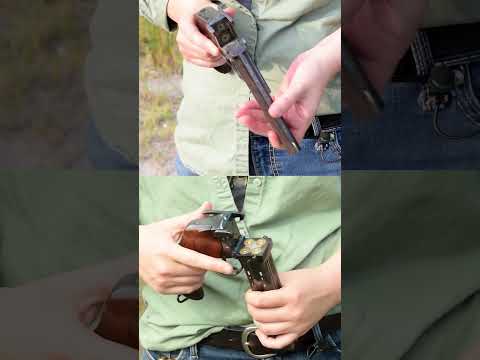
  5. 01:56Loading and Ejection Difficulties
  6. 02:48Historical Context: European vs. US Designs
  7. 03:28French Chamelot-Delvigne 1873 Comparison
  8. 05:34Swiss Model 1878 Comparison
  9. 07:33Maintenance & Disassembly Comparison
  10. 08:17Conclusion: A Lackluster Design

Frequently Asked Questions

Why is the Reichsrevolver often criticized despite its historical military use?

The Reichsrevolver is criticized for its outdated design compared to contemporaries. Key issues include its single-action-only mechanism, heavy hammer spring, awkward grip, cumbersome gate-loading, and difficult ejection process, making it less efficient than contemporary double-action European revolvers.

What were the main disadvantages of the Reichsrevolver's operation?

The Reichsrevolver's primary operational disadvantages were its single-action-only trigger requiring manual cocking for each shot, a slow and manual gate-loading process, and a difficult ejection system that required a separate rod, often carried on the holster.

How did the French Chamelot-Delvigne 1873 and Swiss Model 1878 revolvers compare to the Reichsrevolver?

The Chamelot-Delvigne 1873 and Swiss Model 1878 were superior contemporaries. They featured double-action capabilities for faster firing, better ergonomics, and integrated ejector rods, making them more advanced and user-friendly than the Reichsrevolver.

What made the Reichsrevolver's maintenance difficult?

Field stripping the Reichsrevolver was notably more difficult than its Swiss counterpart. It required the removal of multiple screws, whereas the Swiss Model 1878 utilized a single captive screw, allowing for much easier and quicker access for cleaning and maintenance.

More Reviews Videos You Might Like

More from C&Rsenal

View all →