Clips: Why do we always pick on the Reichsrevolver?

Published on September 17, 2021
Duration: 9:22

This video provides an expert analysis of the Reichsrevolver, highlighting its design flaws and historical context. The presenter, Othais, a recognized expert in historical military firearms, details the cumbersome loading and ejection process, contrasting it with more advanced contemporary European revolvers. The review emphasizes the Reichsrevolver's single-action-only mechanism, heavy hammer spring, and awkward grip inherited from percussion designs, concluding it was a lackluster design for its era despite its historical significance.

Quick Summary

The Reichsrevolver is often criticized for its outdated design, featuring a single-action-only mechanism, cumbersome gate-loading with manual cylinder indexing, and a separate ejector rod for clearing spent casings. These elements contribute to a slow rate of fire and poor ergonomics, especially when compared to more advanced contemporary double-action revolvers from France and Switzerland.

Chapters

  1. 00:00Introduction to Reichsrevolver Criticism
  2. 00:20Model Comparison (1879 vs 1883)
  3. 00:46Mechanical Action: Single Action & Hammer Spring
  4. 01:09Manual Safety Discussion
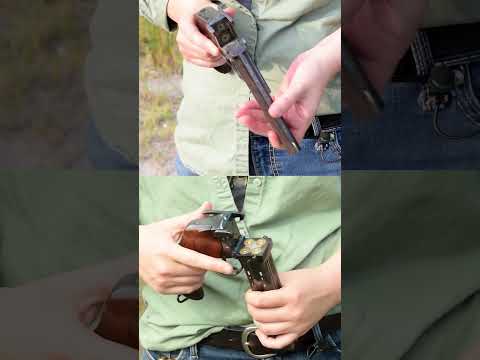
  5. 01:56Loading and Ejection Issues
  6. 02:48Historical Context: European Double Action
  7. 03:28French Chamelot-Delvigne 1873 Comparison
  8. 05:34Swiss Model 1878 Comparison
  9. 07:33Maintenance and Disassembly Comparison
  10. 08:17Conclusion: Lackluster Design

Frequently Asked Questions

Why is the Reichsrevolver often criticized despite its historical significance?

The Reichsrevolver is criticized for its outdated design features for its era, including a single-action-only mechanism, a cumbersome gate-loading system requiring manual cylinder indexing, and a difficult ejection process using a separate rod, all contributing to a slow rate of fire and poor ergonomics.

How does the Reichsrevolver's loading and ejection compare to other 19th-century revolvers?

Compared to contemporary European service revolvers like the Chamelot-Delvigne 1873 or the Swiss Model 1878, the Reichsrevolver's loading gate and separate ejector rod are significantly more cumbersome. These other models often featured double-action capabilities and integrated ejector rods, allowing for faster and more efficient reloading.

What were the main ergonomic issues with the Reichsrevolver?

The Reichsrevolver, particularly the 1879 cavalry model, inherited a large and awkward grip from older percussion pistol designs. This, combined with its single-action-only operation and heavy hammer spring, contributed to poor handling characteristics and a slow rate of fire compared to more modern revolvers of the period.

What makes the Swiss Model 1878 a superior design to the Reichsrevolver?

The Swiss Model 1878 is highlighted for its advanced features, including a rebounding hammer for safety, biased cylinder indexing to aid loading alignment, and a much simpler field stripping process using a single captive screw, making it more user-friendly and efficient than the Reichsrevolver.

More Reviews Videos You Might Like

More from C&Rsenal

View all →