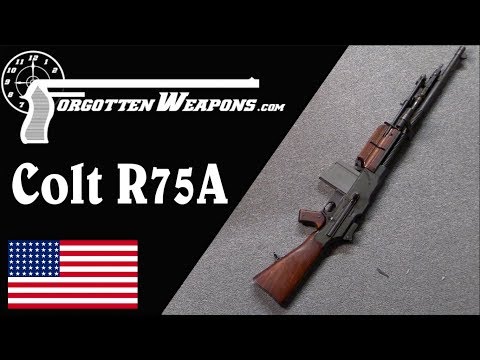
The US WWI Assault Rifle - Almost

Published on June 27, 2022
Duration: 11:51

This video provides an in-depth look at the Browning Automatic Rifle (BAR), exploring its historical context from WWI through WWII and beyond. The speaker, demonstrating expert knowledge, discusses its design evolution, intended role as a squad support weapon, and its potential as an early assault rifle. Modern variants and historical use by figures like Clyde Barrow are also covered, highlighting the BAR's enduring legacy and technical specifications.


Quick Summary

The Browning BAR, designed by John Moses Browning in 1917, was a forward-thinking rifle intended for trench clearing and squad support. While it featured select-fire capability and detachable magazines, its full-power .30-06 cartridge prevented it from being classified as a true assault rifle. Modern variants like the Ohio Ordnance Works HCAR offer a lightweight, tactical interpretation of this iconic design.

Chapters

  1. 00:10Introduction to the Browning BAR
  2. 00:17WWI US Infantry Rifle: 1903 Springfield
  3. 00:26Browning Automatic Rifle (BAR) Design
  4. 00:49BAR's Post-WWI Service and Reliability
  5. 01:09Modernized BAR Rifles: Mark III
  6. 01:36Focus on the 1917/1918 Browning BAR
  7. 01:43Shooting the Springfield 1903A3
  8. 02:30Limitations of Bolt-Action Rifles
  9. 02:55Detailed Look at the BAR (Later Model)
  10. 03:13BAR in Historical Context and Design Evolution
  11. 03:40Early BAR Use and M1 Garand Comparison
  12. 04:20BAR as a Squad Support Weapon
  13. 04:52Colt Monitor Variant
  14. 05:10BAR and Historical Figures (Clyde Barrow)
  15. 05:32BAR Features and Ammunition Considerations
  16. 05:58The 'Assault Rifle' Concept and the BAR
  17. 06:04Ohio Ordnance Works BAR and HCAR
  18. 06:20Ohio Ordnance HCAR: A Lightweight Fighting Rifle
  19. 06:30BAR as an 'Almost Assault Rifle' for WWII
  20. 06:55BAR Loading and Controls
  21. 07:16BAR Internal Mechanism and Sights
  22. 07:56BAR's Role in WWI: Replacing the Chauchat
  23. 08:09Shooting the Ohio Ordnance Works BAR
  24. 09:07BAR Loading and Controls (Outdoor Demonstration)
  25. 10:06Modern BAR Variants and Closing Thoughts
  26. 11:01Support the Channel

Frequently Asked Questions

What was the standard US infantry rifle during World War I?

During World War I, the standard issue infantry rifle for the United States was the 1903 Springfield. This was a bolt-action rifle, notably based on the Mauser action, and was a reliable firearm for its time.

When was the Browning BAR designed and what was its initial role?

The Browning BAR was designed by John Moses Browning in 1917. It was intended to be a forward-thinking rifle for its era, designed for 'walking fire' to clear trenches, and was meant to replace the problematic Chauchat machine gun used by US troops in WWI.

Why is the Browning BAR sometimes considered an 'almost assault rifle'?

The BAR is considered an 'almost assault rifle' due to its select-fire capability and detachable box magazines, features common to assault rifles. However, its full-power .30-06 cartridge, rather than an intermediate cartridge, prevented it from fully fitting the modern definition.

What are some notable modern variants or successors to the Browning BAR?

Modern iterations include the Browning Mark III, a lighter hunting rifle, and the Ohio Ordnance Works HCAR (Heavy Combat Assault Rifle), which is a modernized, lightweight version of the BAR designed for tactical roles, available in various calibers.

Related News

All News →

More Reviews Videos You Might Like

More from Military Arms Channel

View all →