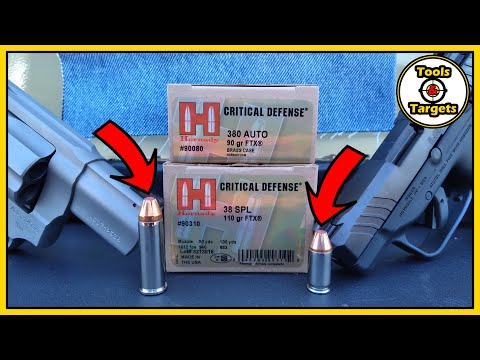
38 special snub ballistics gel test

Published on December 18, 2020
Duration: 14:23

This video details a comprehensive ballistics gel test for various .38 Special loads fired from a Smith & Wesson 642 snub-nose revolver. The expert instructor analyzes bullet expansion, penetration, and wound channels, offering critical insights into ammunition performance for self-defense. Key takeaways include the importance of bullet design for reliable expansion in short barrels and safety considerations for handloading .38 Special ammunition.

Quick Summary

In a ballistics gel test using a Smith & Wesson 642, the Hornady Critical Defense 110gr FTX +P and Federal HST Micro .38 Special rounds showed the most reliable expansion. Heavier bullets often failed to expand, highlighting the importance of specialized defensive ammunition for snub-nose revolvers. Reloaders must be cautious of pressure spikes with deep-seating bullets.

Chapters

  1. 00:00Introduction & Test Setup
  2. 00:37Ammunition Overview
  3. 02:16Federal HST Micro & Reloading Safety
  4. 05:17Range Setup & Barrier
  5. 05:52158gr XTP & 125gr XTP Tests
  6. 07:42Magtech Guardian Gold Test
  7. 08:51Federal HST Micro Test
  8. 09:57Hornady Critical Defense Test
  9. 11:26Conclusion & Bullet Comparison

Frequently Asked Questions

Which .38 Special ammunition expanded best in the snub-nose revolver ballistics test?

The Hornady Critical Defense 110gr FTX +P and the Federal HST Micro demonstrated the best expansion in the ballistics gel test. The Critical Defense met FBI protocol with good penetration, while the HST Micro showed excellent expansion despite slightly shallower penetration.

What are the risks of handloading .38 Special with deep-seating bullets?

Handloading .38 Special with bullets like the Federal HST Micro, which seat deeply, reduces case capacity. This increases the risk of dangerous pressure spikes if standard load data is used, potentially damaging the firearm or causing injury.

Does heavier bullet weight guarantee better performance in .38 Special snub-nose revolvers?

No, the test indicated that heavier .38 Special bullets (158gr and 125gr XTP) failed to expand reliably from the snub-nose revolver. Lighter, specialized defensive rounds like the 110gr Critical Defense showed better expansion.

What is the FBI protocol for self-defense ammunition testing?

While not fully detailed, the FBI protocol generally requires ammunition to penetrate between 12 and 18 inches in ballistic gelatin while expanding effectively. The Hornady Critical Defense met this window in the test.

More Tactical & Gear Videos You Might Like

More from The Gun Dungeon

View all →